Premier League stadium guide: selected grounds and matchday atmosphere
Check the current club set
This atmosphere shortlist includes current and former Premier League grounds; it is not a complete list of the current season's twenty venues. Check the league's official club and fixture list before booking, especially after promotion, relegation or a stadium move.
For the current season, make these three checks before acting:
Separate stadium appeal from ticket probability.
Check the new season's club set.
Consider a nearby alternative fixture, with its own ticket and travel checks.
Check the 2026/27 Fixture Calendar against the official competition or club.
Keep a second match visible through the Football Match Map.
Once you have checked fixtures and tickets, compare trips in the Footbeen planner. The The modern builds section below covers newer venues in this shortlist.
Planning the first round of the new season? The Premier League opening-weekend 2026/27 away-day planner lists all ten fixtures and the practical travel tradeoffs.
How we ranked them
This is an editorial, subjective shortlist, not a measured noise ranking or a fan poll. We consider the character of the stands, the setting and the matchday experience; atmosphere varies with the fixture and cannot be guaranteed.
We group these selected stadiums by character and setting: established grounds, smaller venues and newer builds. The groups are an editorial aid for groundhopping, not a comparison of measured crowd noise or guaranteed value.
The cathedrals
These established grounds are our starting points for a stadium trip. Choose the fixture, seat and travel budget that suit you; a famous ground does not guarantee a particular atmosphere.
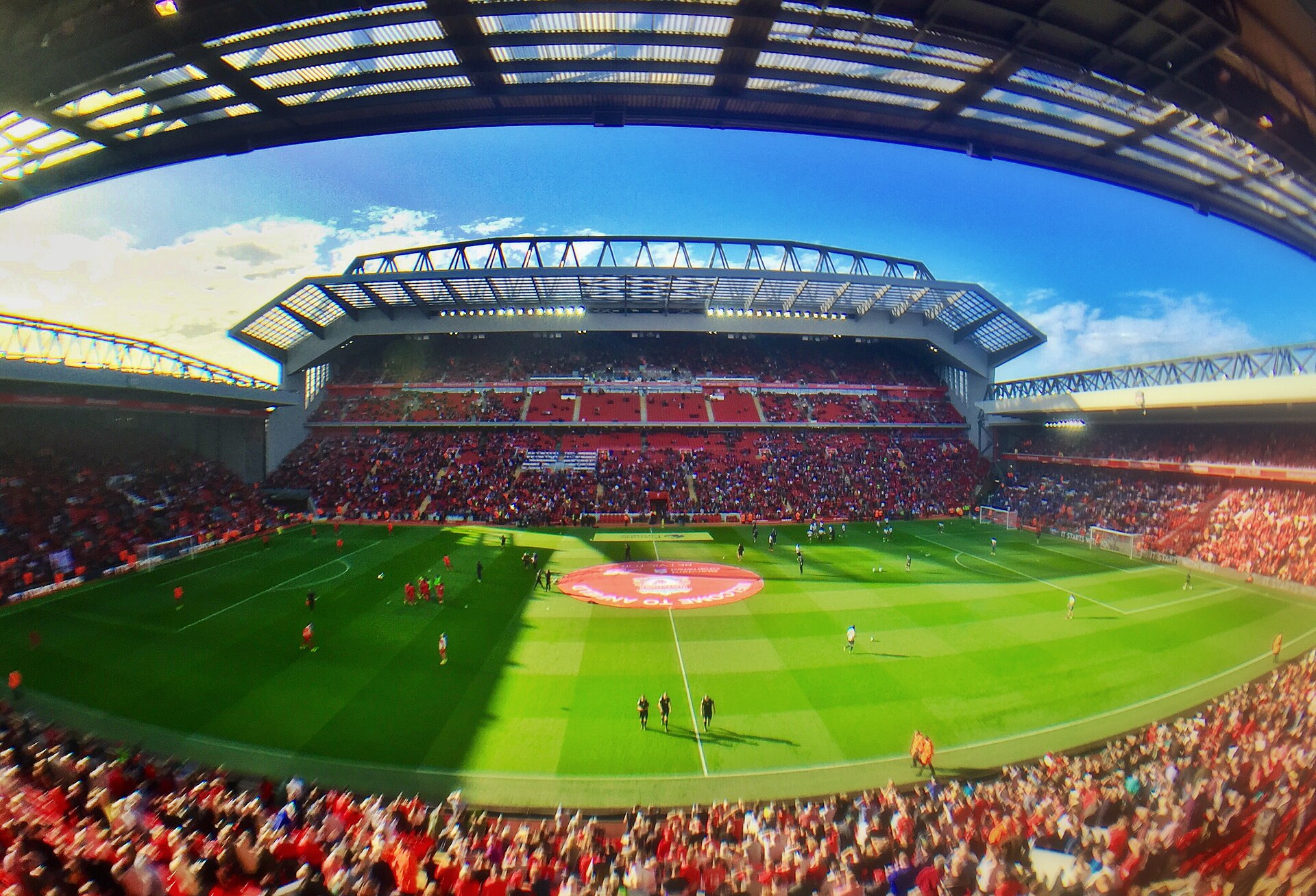
Anfield — Liverpool
Anfield’s Kop and European nights are strong reasons to visit. Allow time to enjoy the build-up around Walton Breck Road. For travel, use Liverpool’s current transport guide: Sandhills connects with the matchday Soccerbus, and the walking route needs a separate time allowance. Do not treat it as a guaranteed fifteen-minute walk.
St James' Park — Newcastle United
St James’ Park is close to central Newcastle, with the Gallowgate End among its familiar stands. Compare the current club travel guide with your ticket entrance and leave time for the approach through the city. Check any pre-match food stop’s opening hours before building it into your route.
Selhurst Park — Crystal Palace
Selhurst Park offers a south London stadium visit, with the Holmesdale Road End a familiar focus of support. Check the club’s current route from Selhurst or Norwood Junction, the assigned entrance and any engineering work. Singing and displays vary by fixture rather than following a guaranteed noise level.
Elland Road — Leeds United
Elland Road has a distinctive setting and long-standing Leeds support. The club lists 37,645 seats and separate redevelopment plans. Use its current stadium map for the Kop, South Stand and your ticketed section; check travel and entrance notices before departure.
The City Ground — Nottingham Forest
The City Ground sits by the River Trent, with the Trent End among its familiar stands. A route across Trent Bridge can be part of the approach from the city, subject to current access notices. Compare it with the club’s travel guide and your entrance; do not plan around a fixed pub walking time.
Villa Park — Aston Villa
Villa Park is a traditional English ground with a prominent Holte End and a long FA Cup history. Check the current club travel guide for the approach from Witton or Aston stations, and choose a route suited to your ticket entrance and mobility needs. For the away end and entry rules, use the full visiting-fan guide.
The hidden gems
These smaller or less prominent venues offer different settings for a stadium trip. Compare available tickets and routes rather than assuming a smaller ground is quieter, cheaper or easier to enter.
Craven Cottage — Fulham
Craven Cottage’s riverside location and the Cottage building give it a distinctive west London setting. Check Fulham’s current visitor guide for the route from Putney Bridge and access through Bishops Park. Compare seats on the club map and verify any restaurant or pub’s opening and supporter policy.
Vitality Stadium — Bournemouth
Vitality Stadium is a compact venue at Kings Park. Use Bournemouth’s current visitor information to compare public transport, walking and any permitted parking. A stop on the seafront is an optional part of your trip; calculate the onward route and arrival buffer separately.
Turf Moor — Burnley
Turf Moor is Burnley’s football ground, with the Cricket Field End and Jimmy McIlroy Stand among its familiar sections. Check the club’s current travel guide for Burnley Manchester Road and other connections. Allow time for the route to your entrance; pub access and opening hours should be confirmed independently.
Gtech Community Stadium — Brentford
Gtech Community Stadium is Brentford’s newer home near Kew Bridge. Its location can suit a west London football trip, but the route and crowd experience depend on your fixture. Check the club’s travel notice, seat map and any local stop before setting off.
Molineux — Wolves
Molineux is close to Wolverhampton city centre, with the South Bank a well-known focus of support. Check the current walking route from the station and train timetable from Birmingham; do not rely on a fixed five-minute walk or twenty-minute connection. Confirm any pub’s opening and supporter policy before planning a stop.
Stadium of Light — Sunderland
Stadium of Light is Sunderland’s home by the River Wear. Use the current club and Metro guidance for stations, service changes and the final approach. Choose your section from the official seating map; crowd noise and any pre-match pub’s availability are fixture-specific.
Everton: Hill Dickinson Stadium and historic Goodison Park
Everton's men's home is Hill Dickinson Stadium. Goodison Park now hosts Everton Women, and the club offers tours of both grounds. Treat them as separate destinations: use Everton's official ticketing and travel information and check which venue your match or tour uses.
The modern builds
These newer stadiums offer another style of football visit. Compare the actual section, facilities and event information; age and capacity alone do not determine comfort, view or atmosphere.
Tottenham Hotspur Stadium — Tottenham Hotspur
Tottenham’s single-tier South Stand and modern facilities make it a distinctive stadium visit. Use the official stadium information for facilities and the matchday travel guide for the route from White Hart Lane. Food outlets and service availability should be checked for your event.
Emirates Stadium — Arsenal
Emirates Stadium is Arsenal’s north London home. Compare the club’s current routes, including Arsenal station on the Piccadilly line, and follow any matchday station restrictions. Use the official seat map for your section rather than assuming the Clock End or a derby guarantees the loudest experience.
Etihad Stadium — Manchester City
The Etihad was adapted for football after the Commonwealth Games. Use Manchester City’s current seating map to compare views and sections; the South Stand and Colin Bell Stand are different stands. Check Metrolink’s matchday service to Etihad Campus and allow time for queues after the match.
Old Trafford — Manchester United
Old Trafford is Manchester United’s established home, with the Stretford End a familiar part of its identity. Check current venue and access announcements before choosing a fixture. Compare Metrolink routes and your ticket entrance rather than relying on a fixed walk or pub stop.
For a first visit, the Old Trafford matchday guide covers tickets, the away end, Stretford End, tram queues, and where to base yourself before kick-off.
American Express Stadium — Brighton & Hove Albion
The Amex is Brighton’s home at Falmer. Consult the club’s current travel information for rail services, ticket-related transport conditions and alternatives during disruption. Choose a pre-match stop that leaves time for the final journey and queues.
Stamford Bridge — Chelsea
Stamford Bridge is Chelsea’s home in west London, with the Shed End and Matthew Harding Stand among its familiar sections. Check the club’s current route from Fulham Broadway and the conditions for your seat. Compare sections and prices on the official map before choosing your ticket.
London Stadium — West Ham United
London Stadium is West Ham’s home in the Olympic Park. The former Olympic athletics venue was adapted for football, so use the current football seating map to compare sections and views. Consult the club’s travel and accessibility guidance for Stratford and your assigned entrance.
Planning your Premier League tour
Build your route around the official club list and confirmed kick-offs. London, Liverpool and Manchester are possible areas to compare, with tickets and transfer time checked for each match. For a Manchester United visit, use the Old Trafford matchday guide.
Newcastle, Sunderland and Leeds are further ideas if dates and transport fit. For Aston Villa, Nottingham Forest, Wolves or any other club, check the current division before calling the trip a Premier League itinerary. Brighton visits centre on American Express Stadium, home to Brighton & Hove Albion.
Read each club’s current sales rules before paying for membership. Fees and eligibility vary, membership does not guarantee a ticket, and official hospitality can also sell out. Confirm your ticket route before booking the trip.
After attending, record the match in Footbeen and follow visited stadiums on your personal map. Keep your own notes about travel and companions alongside your football record.
Official stadium checks: Everton stadium tours and venues; Elland Road capacity and plans; Brentford stadium information.
Keep reading

Keep your football journey in Footbeen
Record attended matches and follow the stadiums you have visited on your personal map.
 Scan with your phone