The Bundesliga matchday food and beer guide: where to eat at every ground
German football culture runs on more than just what happens on the pitch. The Bundesliga has built a reputation for affordable tickets, standing terraces, and some of the best matchday food and drink in European football. For groundhoppers planning a weekend in Germany, understanding what to eat, where to drink, and how the stadium systems work can make the difference between a decent trip and a memorable one. If you are still choosing which trip to book first, start with our Bundesliga away days guide, then use this piece for the matchday food and beer detail.
This guide covers the Bundesliga grounds in this season's guide set, what to expect food-wise, the beer situation, and practical tips for navigating German stadium culture. Whether you are doing a single match or chaining three grounds across a weekend, this is what you need to know.
The basics of Bundesliga stadium food
German stadium catering sits somewhere between the overpriced mediocrity of some leagues and the genuinely good offerings you find in places like Portugal or parts of Spain. Most grounds operate through a mix of permanent kiosks inside the stadium and temporary stalls on the concourses. The quality varies by club and by contractor, but the baseline is generally solid.
The standard menu at most Bundesliga grounds includes:
- Bratwurst in various regional styles (Thuringian, Nuremberg, Currywurst)
- Pommes (fries) with ketchup, mayo, or both
- Brezeln (pretzels), often oversized and fresh
- Schnitzel sandwiches or rolls at larger grounds
- Vegetarian options have improved significantly, with most grounds now offering at least one proper veggie sausage or falafel option
Prices are usually reasonable by European standards, especially compared with the most expensive English grounds. Exact menus and prices move by club, contractor, and season, so treat this as a matchday shape rather than a price list: sausage, fries, pretzel, beer, reusable cup, back to the terrace.
Beer: the backbone of German matchdays
No Bundesliga food guide would be complete without addressing beer. German stadiums serve proper beer, usually from regional breweries with ties to the club or city. This is not generic lager poured from industrial taps. It is local, often good, and consumed in quantities that would alarm health officials in other countries.
How it works:
Most stadiums operate on a deposit cup system. You pay a Pfand on top of the drink price, then get it back when you return the empty. This keeps concourses cleaner and speeds up service. Do not throw your cup away. Either return it for your deposit or keep it as a souvenir.
Beer is typically served in plastic cups, often around the half-litre mark. Alcohol-free options are widely available and actually decent in Germany, which matters if you are driving between grounds.
Important: Some stadiums stop serving alcohol late in the match, or earlier for high-risk fixtures. Plan accordingly.
Ground-by-ground food and drink guide
FC Bayern Munich - Allianz Arena
The Allianz Arena represents corporate Bundesliga at its most polished. The food offering is broader than most, with multiple cuisines available across the four corners of the ground. You will find everything from traditional Bavarian to Asian noodles and pizza.
What to eat: The Weißwurst (white sausage) is the local specialty, served with sweet mustard and a pretzel. It is a Munich thing, and this is the place to try it properly.
Beer: Paulaner dominates, as you would expect in Munich. The beer is excellent, poured properly, and served efficiently despite the crowds.
Practical note: The Allianz Arena is cashless throughout. Cards only. The concourses are spacious but get crowded quickly after goals. If you want food at halftime, queue before the whistle.
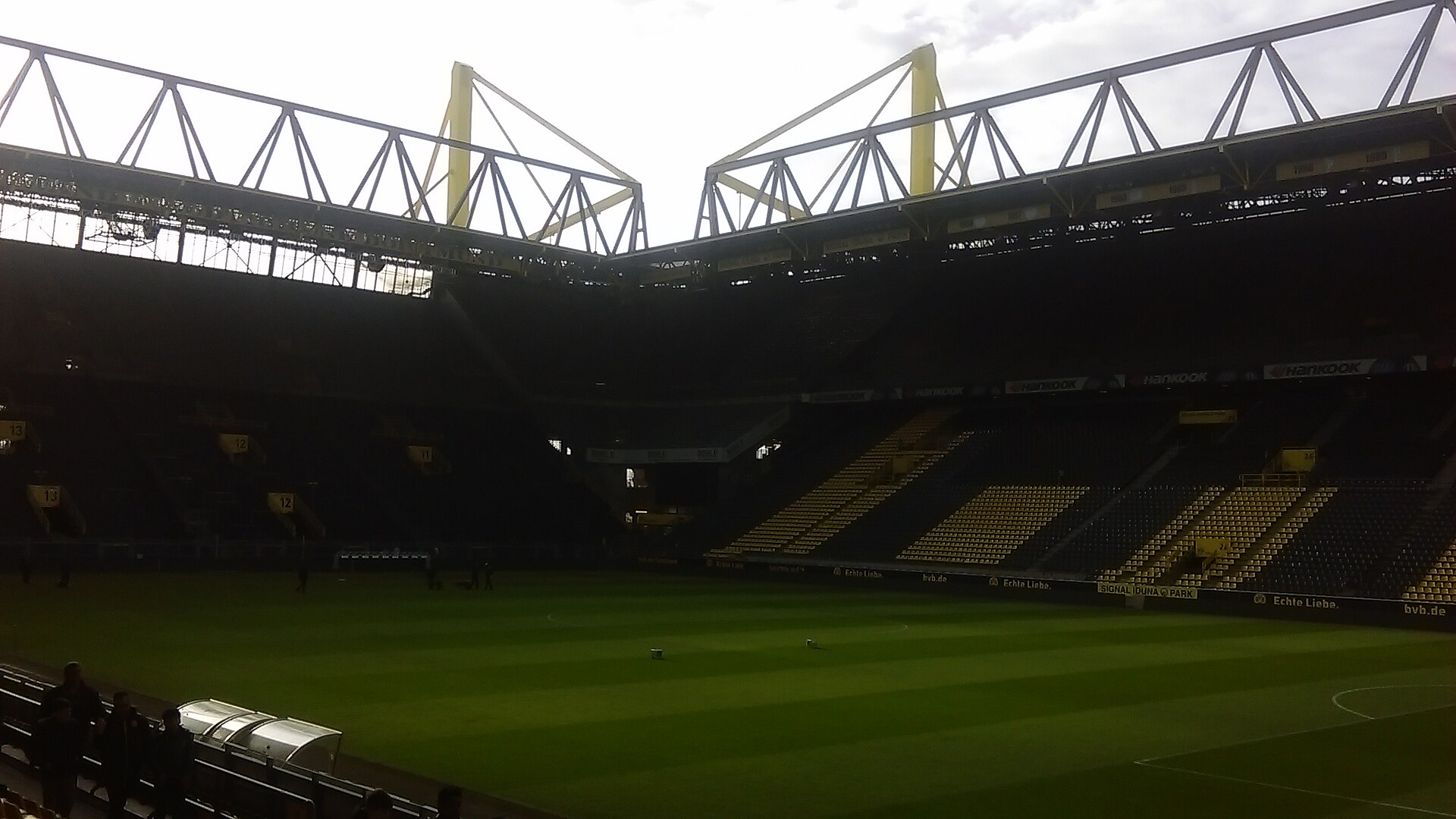
Borussia Dortmund - BVB Stadion Dortmund
The Yellow Wall demands proper fuel, and Dortmund delivers. This is one of the best food experiences in German football, partly because the stadium generates such intense atmosphere that people need sustenance to keep singing.
What to eat: The Currywurst here has a cult following. It is not subtle, but it is effective. The fries are consistently good, and the pretzels are fresh. Vegetarian options include a decent veggie currywurst.
Beer: Dortmund has brewing history, and the stadium serves proper Dortmund lager. The queues move fast despite the volume.
Practical note: The south stand (Yellow Wall) has limited food access during the match due to density. Eat before kickoff or wait until after. The concourse areas behind the other stands are easier to navigate.
Bayer Leverkusen - BayArena
Leverkusen is smaller and more intimate than the big two, and the food reflects this. It is functional rather than spectacular, but perfectly adequate for a matchday.
What to eat: Standard bratwurst and fries. Nothing exceptional, nothing bad. The pretzels are better than average.
Beer: The usual German lager, well-kept but unremarkable.
Practical note: The BayArena is easy to navigate and rarely feels overcrowded at concourse level. Good for a relaxed matchday experience.
RB Leipzig - Red Bull Arena
Leipzig's stadium has modern catering infrastructure but a slightly sterile feel compared to older grounds. The food is decent, the service efficient, but it lacks the character of more traditional venues.
What to eat: Good bratwurst, solid fries. The Leipzig specialty is actually found outside the ground in the city - the Leipziger Allerlei is not stadium food.
Beer: Various options, none specifically local to Leipzig (the city is not known for brewing).
Practical note: The Red Bull Arena is cashless. The location is slightly outside the city center, so factor in travel time if you are planning to eat in town before the match.
Eintracht Frankfurt - Deutsche Bank Park
Frankfurt has excellent stadium food, reflecting the city's position as a genuine culinary destination. The Waldstadion, as older fans still call it, offers more variety than most.
What to eat: The Frankfurt specialty is Grüne Soße (green sauce), but this is not stadium food. Instead, look for the Rindswurst (beef sausage), which is distinct from the pork-based bratwurst found elsewhere. The handkäse (sour milk cheese) is available but divisive - try it if you are feeling brave.
Beer: Frankfurt has local breweries, and the stadium serves decent local lager. The Römer Pils is a safe choice.
Practical note: The stadium is in a green area with limited pre-match options nearby. Eat inside or plan to stop in the city center en route.
VfB Stuttgart - MHP Arena
Stuttgart's stadium has been through various names and renovations, but the food offering has remained solid. This is Swabia, and the food reflects regional pride.
What to eat: The Maultaschen (Swabian ravioli) are sometimes available and worth seeking out. Otherwise, standard sausages and fries done well.
Beer: Stuttgart has brewing tradition, and the local options are good. The Dinkelacker brewery has historical ties to the club.
Practical note: The stadium is accessible by U-Bahn. The area immediately around the ground has limited options, so plan your arrival timing.
SC Freiburg - Europa-Park Stadion
Freiburg's new stadium maintains the intimate feel of their old ground, and the food is better than you might expect for a smaller club. The Black Forest region has strong food traditions.
What to eat: The Schwarzwälder Schinken (Black Forest ham) is available in sandwich form and is genuinely good. The sausages are locally sourced.
Beer: Rothaus is the regional brewery, and their Tannenzäpfle is one of the best stadium beers in Germany. This alone is worth the trip.
Practical note: Freiburg is a beautiful city and worth exploring. The stadium is on the edge of town, so combine matchday with sightseeing.
1. FC Heidenheim - Voith-Arena
Heidenheim is one of the smallest-scale trips in this guide, and the stadium reflects that. The food is simple, the queues are manageable, and the experience is refreshingly old-school.
What to eat: Simple bratwurst, fries, pretzels. Nothing fancy, but done properly.
Beer: Regional options, nothing remarkable but perfectly drinkable.
Practical note: Heidenheim is not a major city, so plan your transport carefully. The ground is intimate and the atmosphere excellent despite the size.
1. FC Union Berlin - Stadion An der Alten Försterei
Union Berlin represents everything good about German football culture, and the food and drink situation matches the ethos. This is anti-corporate, fan-owned, and authentic.
What to eat: The food is simple and cheap. Bratwurst, fries, pretzels. The quality is decent, but nobody comes to Union for gourmet catering. They come for the atmosphere and the community.
Beer: Various options, reasonably priced. The focus is on accessibility rather than craft beer pretension.
Practical note: The stadium is in Köpenick, well outside central Berlin. The journey is part of the experience - take the S-Bahn and walk through the forest with thousands of other fans. Eat before you leave central Berlin or queue early at the ground.
VfL Wolfsburg - Volkswagen Arena
Wolfsburg is a company town built around Volkswagen, and the stadium reflects this corporate heritage. The food is organised and functional, but the matchday is more about efficiency than pre-match romance.
What to eat: Standard stadium fare, executed adequately. The Volkswagen Arena has improved its vegetarian options significantly.
Beer: Various German lagers, nothing specifically local (Wolfsburg is not a brewing city).
Practical note: The stadium is impressive architecturally but isolated. The city center is a bus ride away. Plan your food strategy around the stadium or eat in town before travelling.
1. FSV Mainz 05 - Mewa Arena
Mainz is a smaller city with a strong football culture, and the stadium food reflects Rhineland traditions.
What to eat: The Mainzer Spundekäs (soft cheese spread) is sometimes available and worth trying. Otherwise, standard sausages and fries.
Beer: The usual German options, plus local wines from the Rhineland (Mainz is in wine country, not beer country).
Practical note: The stadium is walkable from the city center. Mainz is a pleasant city with good pre-match options in town.
Borussia Mönchengladbach - Borussia-Park
Gladbach's stadium is one of the best-designed in Germany for concourse flow, and this extends to food service. The queues are manageable even at halftime.
What to eat: Good quality bratwurst, excellent fries. The region has strong food traditions, and this shows in the stadium offering.
Beer: The local brewery tradition is strong, and the stadium serves proper local lager.
Practical note: The Borussia-Park is outside the city but well-connected. The club runs shuttle buses from the main station. Arrive early and enjoy the pre-match atmosphere.
Werder Bremen - Wohninvest Weserstadion
Bremen is a historic city with strong food traditions, and the stadium reflects this. The Weserstadion is also one of the most atmospheric grounds in Germany.
What to eat: The Bremer Knipp (blood sausage) is available and authentic, though not for everyone. The standard sausages are excellent. Bremen is also known for fish, and there are sometimes fish sandwich options reflecting the city's maritime history.
Beer: Haake-Beck is the local brewery, and their beer is served throughout the stadium. It is a distinctive northern German style - lighter than Bavarian beer.
Practical note: The stadium is beautifully located on the Weser river. The walk from the city center through the park is one of the best pre-match experiences in German football. Eat in town or at the stadium - both work well.
FC Augsburg - WWK Arena
Augsburg is often overlooked by groundhoppers, which is a mistake. The stadium is modern and comfortable, and the food is solid.
What to eat: Standard Bavarian stadium fare. The Weisswurst is available, though Augsburg has its own sausage traditions too.
Beer: Regional Bavarian options, reliably good.
Practical note: The stadium is outside the city but accessible by tram. Augsburg itself is a historic city worth exploring.
TSG Hoffenheim - PreZero Arena
Hoffenheim is the least traditional Bundesliga experience. The village has 3,000 residents and a stadium holding 30,000. The food is functional but unmemorable.
What to eat: Standard catering, nothing distinctive. The club has tried to improve the offering, but this is never going to be a culinary destination.
Beer: Standard German lager options.
Practical note: The stadium is in the middle of nowhere. Seriously. You will need a car or the shuttle bus from Sinsheim. Eat before you travel.
FC St. Pauli - Millerntor-Stadion
St. Pauli is unique in German football, and the matchday experience reflects the club's alternative culture. The food is better than you might expect for a second-division-sized ground.
What to eat: More vegetarian and vegan options than most Bundesliga grounds. The club's politics extend to food choices. Quality is decent across the board.
Beer: Various options, reflecting Hamburg's brewing scene. The Astra beer is closely associated with the club (though not officially, due to sponsorship rules).
Practical note: The Millerntor is in the heart of the Reeperbahn district. You will not struggle to find food or drink before or after the match. This is one of the best stadium locations in Europe for pre-match atmosphere.
Hamburger SV - Volksparkstadion
HSV changes the food-and-beer map whenever the Volksparkstadion is on your itinerary, because it is one of the classic big-city football days in Germany. The setting in the park gives you space to arrive early, and Hamburg gives you proper pre-match options before you even think about the concourse.
What to eat: Simple northern German stadium fare: sausages, fries, pretzels, and enough volume to handle a big crowd. If you want the better meal, eat in Hamburg first and treat the stadium food as terrace fuel.
Beer: Northern German styles rather than Bavarian heaviness. It suits the ground: quick, cold, unfussy, and built around the social side of the day.
Practical note: Do not rush straight from the Hauptbahnhof to the turnstile. Hamburg is one of the best cities in Europe for building a full matchday around the football.
1. FC Köln - RheinEnergieStadion
Cologne is a beer city first and a football city at the same time, which makes this one of the easiest grounds in Germany to plan around food and drink. The best pre-match experience is in the city rather than on an out-of-town retail park.
What to eat: Stadium sausages and fries do the job, but the real Cologne move is to eat before the match in town, then arrive ready for the noise. If you have time, make the old town beer halls part of the day.
Beer: Kölsch culture is the point. Inside the stadium, expect matchday lager and fast service; outside it, drink the local beer properly in small glasses and let the servers keep them coming until you say stop.
Practical note: The RheinEnergieStadion is one of the best atmosphere grounds in Germany when Köln are rolling. Give yourself time for the tram queues and do not underestimate how early the city starts feeling like matchday.
Planning a groundhopping weekend
The Bundesliga is perfect for multi-ground weekends. The transport infrastructure is excellent, ticket prices are usually reasonable, and the fixture spread allows for efficient planning when the TV schedule falls kindly.
Sample weekend routes:
The Rhine-Ruhr loop: Dortmund, Gelsenkirchen when Schalke fit the weekend, Düsseldorf, Cologne, Leverkusen, Mönchengladbach. This is the densest groundhopping region in Germany.
Bavaria: Munich and Augsburg, with Nuremberg as the obvious extra stop when the fixture list works.
Northern route: Hamburg, Bremen, Wolfsburg, with Hanover as the obvious extra stop when the fixture list works.
The Berlin double: Union and Hertha (if Hertha are promoted). Two very different stadium experiences in one city.
Practical tips for multi-ground trips:
- Book tickets in advance through club websites. Bundesliga tickets sell out, especially for big games.
- Check kickoff times carefully. German fixtures move for TV, and Friday evening or Sunday slots can make or break a multi-ground plan.
- The Deutsche Bahn network is your friend. Most stadiums are near stations.
- Consider the Deutschlandticket if you are doing extensive regional rail travel, but check the current rules and price before you build a trip around it.
- If you are driving, check the current drink-drive rules before you travel. The easier answer is usually: take the train and enjoy the beer.
How to track your Bundesliga groundhopping
If you are serious about visiting German grounds, you will want to track your progress. The Footbeen stadium tracker lets you log every match you attend, build your personal stadium map, and see your groundhopping statistics over time.
For planning multi-ground weekends, the Footbeen travel planner helps you find fixtures near any location and build efficient routes between grounds.
Final thoughts
German stadium food will not change your life, but it will not ruin your day either. The value is exceptional, the beer is good, and the systems work. More importantly, the football culture around the food - the standing terraces, the singing, the community - makes every Bundesliga matchday feel like a proper event.
For groundhoppers, Germany offers the best combination of accessibility, atmosphere, and affordability in European football. The food is just fuel for the main event, but it is good fuel, usually reasonably priced, and served efficiently. That is more than you can say for many leagues.
Plan your route, book your tickets, and bring your appetite. And do not forget to return those beer cups.
Keep reading
Start your football journey
Free · iOS & Android · match search ready when you are
 Scan with your phone