Football in London: every stadium, how to get tickets, and the best matchdays
Why London is the football capital of the world
England invented league football, and London is where more of it happens per square mile than anywhere else. In the 2025-26 season, Arsenal, Chelsea, Crystal Palace, Fulham, Tottenham Hotspur, and West Ham United all play in the Premier League. Brentford sit just below. Below them, the Championship and League One add QPR, Millwall, Charlton, and Leyton Orient to the mix. You could attend a professional match in London every single day of the week during the season and still not run out of options.
For groundhoppers and travelling fans, that density is the whole appeal. A long weekend in London can give you three or four new grounds without a single train beyond Zone 6. Here is what you need to know about each stadium, how to get tickets, and how to build the perfect London football weekend.


Emirates Stadium (Arsenal)
The Emirates holds just over 60,000 and is one of the loudest grounds in the country when the Clock End gets going. The stadium replaced Highbury in 2006 and sits in Holloway, north London, surrounded by residential streets that hum with matchday energy from about two hours before kick-off. The concourse is wide and modern, but the atmosphere inside is anything but sterile — Arsenal's title-chasing years have turned it into a cauldron again.
Getting there: Arsenal station (Piccadilly line) is a three-minute walk. Holloway Road is equally close but often exit-only on matchdays. From central London, budget 25 minutes on the Tube.
Tickets: Extremely difficult. Arsenal's membership scheme (Red tier) gives you access to general sale, but most league matches sell out at the Silver member stage. Cup games and early-round European ties are your best bet. Expect to pay from around £50 face value.
Nearby pub: The Tollington, a five-minute walk from the ground, is the classic pre-match spot. Busy from midday on Saturdays.
Stamford Bridge (Chelsea)
Stamford Bridge is squeezed into the Fulham Road with houses pressing against three sides of the ground. It holds around 40,300 — small for a club of Chelsea's stature — and that compression creates an intensity that bigger modern bowls sometimes lack. The away section sits in the shed end, tight and steep, and the acoustics bounce noise around the ground in a way that rewards vocal supporters.
Getting there: Fulham Broadway (District line) is a six-minute walk. The road from the station to the ground is lined with burger vans and scarves. From central London, around 20 minutes on the Tube.
Tickets: Chelsea operate a membership and loyalty-point system. General sale does happen for lower-profile league matches, but big fixtures sell out to members fast. Hospitality packages are available as a last resort, starting from about £200.
Nearby pub: The Butcher's Hook on Fulham Road fills up early but has decent beer and a good view of the crowd heading to the ground.
Selhurst Park (Crystal Palace)
Selhurst Park is everything a neutral groundhopper dreams about. The Holmesdale Road end is home to Palace's organised ultras group, and the noise they produce — drums, flags, coordinated chants — is among the best in the Premier League. The ground holds around 25,500 and feels older and more cramped than most top-flight venues, which is exactly why it has so much character.
Getting there: Selhurst or Norwood Junction (both Overground) are about a ten-minute walk. Thornton Heath is slightly closer. South London is less well served by the Tube, so plan for Overground or trains from London Bridge or Victoria.
Tickets: Palace are one of the more accessible Premier League clubs for visiting fans. Membership is cheap, and general sale tickets do appear for midweek or lower-profile fixtures. Prices start around £30.
Nearby pub: The Clifton Arms on Clifton Road is the go-to — unpretentious, packed, and within earshot of the Holmesdale.
Craven Cottage (Fulham)
Craven Cottage sits on the north bank of the Thames in a spot so pretty it barely feels like a football ground. The Cottage itself — the actual building in the corner — dates to the 19th century, and the Riverside Stand gives you a view of the water. Capacity is around 29,600 following recent expansion. The atmosphere is more relaxed than intense, which makes it a perfect first London ground for visitors.
Getting there: Putney Bridge (District line) is a 15-minute walk through Bishop's Park along the river. It is one of the nicest walks to any ground in England.
Tickets: Fulham are generally the easiest Premier League ticket in London. Membership helps, but general sale is realistic for most matches. Prices start from about £30.
Nearby pub: The Eight Bells on Fulham High Street, or any of the pubs along Putney Bridge Road, make for a civilised pre-match pint.
Tottenham Hotspur Stadium (Tottenham)
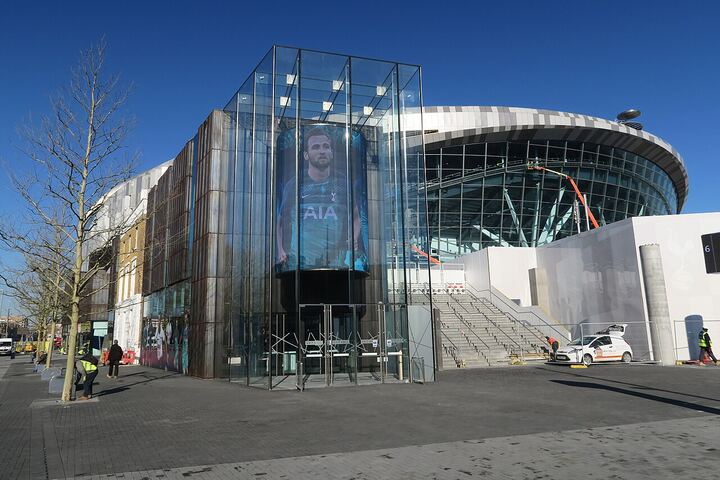
Tottenham Hotspur Stadium opened in 2019 and is the newest major football ground in England. It holds 62,850, has a single-tier south stand that is one of the largest in Europe, and the matchday experience — from the microbrewery to the food market — is a level above most Premier League venues. The acoustics were designed to trap noise, and on a big European night the place delivers.
Getting there: White Hart Lane (Overground) is right next to the ground. Seven Sisters (Victoria line) is a 20-minute walk or a short bus ride. Tottenham Hale (Victoria line / National Rail) is also an option. From central London, allow 30-40 minutes.
Tickets: Spurs have a large stadium to fill, so availability is better than Arsenal or Chelsea. Membership gets you into most league games. General sale sometimes opens for midweek fixtures. Expect to pay from £40.
Nearby pub: The Bricklayers Arms on the High Road has been the pre-match pub for decades. The area around the ground is rapidly changing, but the matchday buzz is still concentrated on Tottenham High Road.
Heading there as a visiting fan? Our Tottenham Hotspur Stadium matchday guide covers where the away end is, which station to use, and the cashless and bag rules to check before you travel.
London Stadium (West Ham)
The London Stadium in Stratford holds 62,500 and divides opinion. Built for the 2012 Olympics and converted for football, it is vast, modern, and airy — but the running track between the pitch and the stands means you sit further from the action than at any other Premier League ground. West Ham fans have made the best of it, and the atmosphere in the Sir Trevor Brooking Stand can be excellent, but it is not a ground that flatters tight games.
Getting there: Stratford (Central, Jubilee, Elizabeth lines, plus DLR and Overground) is a ten-minute walk through the Olympic Park. It is one of the best-connected grounds in the country.
Tickets: Availability is reasonable given the stadium's size. West Ham's membership scheme opens most league matches. General sale happens regularly. Prices start from around £35.
Nearby pub: The Cow on Stratford High Street, or the bars inside Westfield Stratford City if you want something before the walk through the park.
Getting tickets in London
London's Premier League clubs all operate membership schemes that gate access to ticket sales. The pattern is the same everywhere: buy a membership (usually £25-£50 per season), wait for your tier's sale window, and hope. For Arsenal and Chelsea, even membership is often not enough for big fixtures — you need loyalty points from previous purchases.
General sale — when tickets go to anyone — is realistic at Fulham, Crystal Palace, and West Ham for most home matches. At Tottenham it happens occasionally. At Arsenal and Chelsea it is rare for league games.
If you are visiting London for a single weekend and need a guaranteed seat, hospitality is the last resort. Every club sells hospitality packages, typically starting around £150-£250. It is expensive, but you get a seat, a meal, and no uncertainty. For a once-in-a-lifetime trip, some fans find it worth the price.
Cup competitions are your friend. FA Cup third-round ties, League Cup early rounds, and European group-stage games against lesser-known opponents often have wider availability. Check each club's website four to six weeks before the match date.
Getting around on matchday
London's Tube network connects every Premier League ground in the city. Get an Oyster card or use a contactless bank card — both work on the Tube, buses, Overground, and DLR. A day of unlimited travel within Zones 1-6 costs around £15, which covers every football ground in this guide.
Here is a rough mental map: Arsenal is north (Piccadilly line). Tottenham is further north (Overground or Victoria line to Seven Sisters). Chelsea and Fulham are southwest (District line). Crystal Palace is southeast (Overground from London Bridge). West Ham is east (Central, Jubilee, or Elizabeth line to Stratford).
Walk times from station to turnstile: Arsenal 3 minutes, Chelsea 6 minutes, Crystal Palace 10 minutes, Fulham 15 minutes, Tottenham 5 minutes (from White Hart Lane), West Ham 10 minutes. Factor in crowds on matchday and add five minutes to each.
One tip: the Tube gets extremely busy in the 30 minutes after the final whistle. If you are not in a rush, wait inside the ground for 15 minutes, grab a last drink, and let the first wave of fans clear the station. You will get a seat on the train instead of standing in a tunnel.
Best London derbies to target
Arsenal vs Tottenham. The North London Derby is the biggest fixture in the city. The atmosphere at both grounds is electric, tickets are almost impossible unless you have years of loyalty points, and the intensity on the pitch matches the noise in the stands. If you can get in, this is the one.
Chelsea vs Fulham. The west London derby is played across a mile of the Fulham Road. The proximity between the two grounds gives this fixture a neighbourhood feel that the bigger derbies lack. Easier to get tickets for (especially at the Fulham end), and the walk between the two grounds is a matchday experience in itself.
Crystal Palace vs Brighton. Not a London-only derby, but the M23 rivalry is fierce and Selhurst Park on derby day is one of the most hostile atmospheres in the league. The Holmesdale turns up the volume, the flags come out, and neutral fans leave understanding why Palace fans love their club.
Any London club vs any other. The Premier League schedule gives you multiple London derbies every season. West Ham vs Tottenham, Arsenal vs Chelsea, Crystal Palace vs Fulham — each one carries local edge that a standard league fixture does not. When planning an away day, checking for London derbies should be step one.
Beyond the Premier League
London's lower leagues are where the groundhopping gets really interesting. Millwall's The Den in Bermondsey is one of the most intimidating grounds in English football — a proper old-school atmosphere with a reputation that precedes it. QPR's Loftus Road in Shepherd's Bush holds just over 18,000 and puts you so close to the pitch you can hear the players talk. Charlton Athletic's The Valley in south-east London is a grand old ground that has seen better days but still has a strong community feel.
Leyton Orient's Brisbane Road in east London is a favourite among groundhoppers — small, friendly, and easy to get tickets for. And Brentford, now in the Premier League at the Gtech Community Stadium, are worth mentioning as a club that climbed from League Two to the top flight in living memory. Their matchday is one of the best in west London.
For the committed groundhopper, London's non-league scene offers another layer entirely. Dulwich Hamlet, Bromley, Sutton United, Wealdstone — all playing in atmospheric little grounds where a ticket costs £15 and you stand on a terrace with a cup of tea. A Saturday afternoon at a non-league London ground followed by an evening in the pub is one of the best days football can offer.
Plan your London football weekend
Friday: Arrive in London. Check into your hotel — anywhere in Zones 1-2 puts you within 30 minutes of every ground. Walk around the city, find a pub near your Saturday ground, and pick up any pre-purchased tickets from a collection point if needed.
Saturday (3pm kick-off): This is the main event. Head to the ground two hours early, soak up the pre-match atmosphere in the local pub, walk through the streets with the crowd, and get to your seat for warm-ups. After the match, head back into central London for the evening. If there is an early kick-off (12:30pm) you might even fit in a second ground — a non-league 3pm fixture somewhere in south or east London.
Sunday: If there is a Sunday fixture (often 2pm or 4:30pm for televised games), go. If not, use the morning to walk past a ground you did not get into — the Emirates, Stamford Bridge, and Craven Cottage are all worth seeing from the outside even on non-matchdays. Stadium tours are available at Arsenal, Chelsea, Tottenham, and West Ham if you want to get inside without a ticket. Spend the afternoon exploring the city before heading home.
If you are planning to travel by rail between grounds, our guide to football away days by train covers several London stadiums with excellent rail connections. Two grounds in a weekend is realistic. Three is ambitious but possible if the fixture list cooperates. Four is a stretch reserved for long weekends and careful planning. Log every one of them — a match you did not record is a match you will eventually forget.
For a broader discovery workflow, start with football matches this weekend, use the London football weekend planner for city-specific route choices, and then use the weekend football trip planner if you want to turn the city into a two-ground route.
Track your London grounds
If you are ticking off London stadiums, you want a record that lasts longer than a ticket stub. Footbeen lets you search for a match, light up every stadium on your personal map, and track your progress across the Premier League, the Championship, and beyond. It is free on iOS and Android: add the game you attended, then let the map do the rest.
See how your London grounds fit into the bigger picture: browse our full Premier League stadium guide or read about football across England.
Keep reading

Start your football journey
Free · iOS & Android · match search ready when you are
 Scan with your phone