Football in Manchester: Old Trafford, the Etihad, and a city built on the game
A city of two halves
Manchester is the only city in England where two clubs have won the Premier League, the Champions League, and the FA Cup. Manchester United and Manchester City sit barely three miles apart — one at Old Trafford (capacity 74,310), the other at the Etihad Stadium (53,400). For any football fan planning a trip to England, Manchester is essential. Two stadiums, two very different stories, one weekend.
But Manchester's football identity stretches well beyond the Premier League. The city and its surrounding boroughs are home to a constellation of clubs at every level of the pyramid. If this is your first away day and you are travelling alone, Manchester is one of the most welcoming football cities in England. This is a guide to all of it: the big two, the derby, the wider football ecosystem, and how to put a Manchester football weekend together.
Old Trafford: the Theatre of Dreams
Old Trafford has been Manchester United's home since 1910. It is the largest club ground in England, and one of the most recognised football stadiums on earth. The name "Theatre of Dreams" was coined by Bobby Charlton, and it stuck — partly because of the history that happened here, partly because the ground itself still has a presence that televised football cannot transmit.
The Stretford End is the heart of the atmosphere. The Sir Alex Ferguson Stand dominates one side. The Munich Tunnel entrance, the statues of Best, Law, and Charlton outside — Old Trafford is a place where the architecture tells stories before kick-off even arrives.
If Old Trafford is the main reason for your trip, use the dedicated Old Trafford matchday guide for visiting fans for the away end, tram timing, pubs, and first-visit details.
Getting tickets
United matches sell out. For league games, your best routes are official membership (around £35 per season, gives access to the members' ticket sale window), the ticket exchange where season-ticket holders resell, or hospitality packages if budget allows. Cup matches and mid-table fixtures against less fashionable opposition are your easiest way in. Set a calendar reminder for the day tickets go on sale — they move fast.
Getting there
The nearest Metrolink tram stop is Old Trafford, on the Altrincham line. From Manchester Piccadilly, it's a 15-minute ride. On matchday the tram is packed, so arrive early. Walking from the city centre takes about 40 minutes along the Bridgewater Canal — a route many regulars prefer on dry days.
Pre-match
Hotel Football, the hotel overlooking the ground co-owned by former United players, has a rooftop bar and a matchday buzz. The Bishop's Blaize on Chester Road is the traditional pub — noisy, standing room only by noon on a Saturday, full of away fans mixing with locals. Sam Platts nearby is another classic. Arrive at least two hours before kick-off if you want a seat and a pint.
Etihad Stadium: City's modern fortress
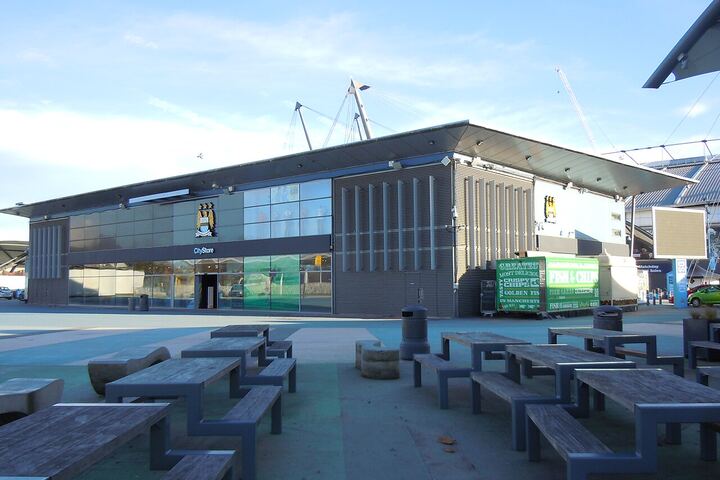
The Etihad Stadium was built for the 2002 Commonwealth Games and became Manchester City's home in 2003, replacing the old Maine Road ground. It has since been expanded, redeveloped, and surrounded by the Etihad Campus — a training complex, an academy facility, and a growing commercial district in east Manchester.
The stadium is modern, functional, and increasingly loud. The criticism that City lacked atmosphere was fair in the early years. It is less fair now. The South Stand has become the engine room, and big European nights at the Etihad have a genuine intensity that anyone who visited during the treble-winning run will confirm.
Getting tickets
Tickets for City are generally easier to get than for United, especially for league matches against lower-half opposition. A Cityzens membership gives priority access. The club's website releases remaining tickets to general sale closer to matchday. Champions League knockout games and the Manchester derby are exceptions — those sell out immediately.
Getting there
The nearest tram stop is Etihad Campus, on the Ashton-under-Lyne line. It's a short walk from the stop to the ground. From Piccadilly station, the tram takes about ten minutes. On matchday, many fans walk from the city centre — it's roughly 25 minutes on foot through Ancoats and the Ashton Canal path.
Pre-match
The pre-match scene around the Etihad is more spread out than Old Trafford. Mary D's, a bar just outside the ground, is the unofficial home pub. The Townley on Albert Street and The Stanley on Ashton New Road are popular with regulars. The area around the stadium has developed rapidly, but it's still more industrial than the leafy streets around Old Trafford — which gives it a different, rougher-edged matchday energy.
The Manchester derby
United vs City is one of the biggest fixtures in world football. It was always a fierce local rivalry; since City's takeover in 2008 and subsequent rise to domestic and European dominance, it became a genuinely global event. The atmosphere inside either ground on derby day is unlike any other Premier League match.
Getting tickets to the Manchester derby through general sale is nearly impossible. Both clubs prioritise season-ticket holders and long-standing members. If you don't have an existing membership with a ticket-purchasing history, your realistic options are hospitality (expensive — typically £300 and upwards) or the secondary market (risky and technically against club terms). The honest advice: plan your trip around a regular league fixture, not the derby, unless you have connections.
If you do get in, expect noise from the first whistle. The away end at both grounds is small, intense, and relentless. The home support rises to meet it. There is no quiet period in a Manchester derby. It's 90 minutes of commitment from everyone in the building.
Beyond the big two
Greater Manchester is one of the most football-dense regions in the world. Within a short train or tram ride of Piccadilly, you can reach clubs across the entire English pyramid:
Stockport County — Edgeley Park, a proper old-fashioned ground, a 10-minute train from Piccadilly. Stockport's recent rise through the leagues has made them one of the best lower-league days out in England.
Bolton Wanderers — the Toughsheet Community Stadium (formerly the Reebok), about 30 minutes from Manchester by rail. A club with Premier League history and a loyal following.
Wigan Athletic — the Brick Community Stadium, reachable in 25 minutes from Piccadilly. Another club with a top-flight past, including an FA Cup triumph in 2013.
Salford City — the Peninsula Stadium, owned by Manchester United's famous Class of '92 (Beckham, Scholes, Neville, Giggs, Butt). A modern ground, a non-league-to-Football-League success story, and an easy trip from central Manchester.
FC United of Manchester — Broadhurst Park in Moston, formed in 2005 by United fans opposed to the Glazer takeover. A fan-owned club with a passionate community identity.
If you're a groundhopper planning an away day, Greater Manchester lets you tick off multiple grounds in a single weekend without needing a car.
Getting around Manchester
Manchester is a compact, well-connected city for football visitors:
Metrolink tram — the backbone of matchday transport. Lines run to both Old Trafford and the Etihad Campus, plus connections across Greater Manchester. Buy a day pass and you're covered.
Manchester Piccadilly — the main rail station, with direct trains from London Euston (2 hours), Birmingham (90 minutes), Liverpool (50 minutes), and Leeds (55 minutes). Manchester Victoria is the secondary station, useful for Bolton and some northern connections.
Manchester Airport — the largest airport outside London, with flights from across Europe. A direct train to Piccadilly takes 20 minutes.
Walking — the city centre is compact. From Piccadilly to Deansgate is 15 minutes on foot. Both stadiums are walkable from the centre if you have time and decent shoes.
Planning a Manchester football weekend
Here's how to structure a weekend around football in Manchester:
Friday evening
Arrive into Piccadilly, check in, and head to the Northern Quarter. This is Manchester's creative district — independent bars, live music, street food. Afflecks Palace is worth a walk-through. For a pre-weekend pint, try The Marble Arch (own-brewed beer) or Port Street Beer House. If there's a Friday-night match at a lower-league ground nearby — Stockport occasionally play on Fridays — that's a perfect warm-up.
Saturday: matchday
Whether it's Old Trafford or the Etihad, build the day around the match. Morning: breakfast at one of the cafes around Ancoats or Deansgate. Midday: head to the ground early, find a pub, soak in the build-up. After the match, the city centre fills up — Deansgate Locks and Peter Street are where most fans end up in the evening.
Sunday: the football museum and beyond
The National Football Museum in Cathedral Gardens is free and genuinely excellent — three floors of football history, memorabilia, and interactive exhibits. It's the best football museum in England and easily worth two hours. After that, the Old Trafford stadium tour (bookable online) or the Etihad stadium tour gives you behind-the-scenes access to whichever ground you didn't visit on Saturday. If you have time, walk the Bridgewater Canal route between the two stadiums — it's a quiet, scenic way to see both ends of Manchester's football geography.
Log your Manchester grounds
For the full picture of every ground in the top flight, our Premier League stadium guide ranks every ground for atmosphere. If you are planning a route rather than only reading about the city, use the Manchester football weekend planner alongside the football matches this weekend page. If you are planning a broader tour of English cities, the London and Liverpool guides follow the same format. Whether you visit one stadium or five, Manchester deserves a place in your football diary. Footbeen lets you log every match, light up every stadium on your personal map, and track your journey across the Premier League and beyond. A weekend in Manchester could add two Premier League grounds, a couple of lower-league ticks, and a story worth keeping.
Download Footbeen for free on iOS and Android, log the matches, and watch the map fill in.
Keep reading

Start your football journey
Free · iOS & Android · match search ready when you are
 Scan with your phone