Football in Liverpool: Anfield, Goodison Park, and a city that breathes the game
The city where football is a religion
Liverpool and Everton are separated by a park. Stanley Park sits between Anfield and Goodison Park, barely half a mile of grass between two of the most storied grounds in English football. No other city in England has two major clubs this physically close, and nowhere else does the rivalry feel so embedded in the geography. You can stand in the middle of Stanley Park and see both grounds. On derby day, both sets of supporters walk through the same streets, past the same chip shops, into the same postcode.
For groundhoppers, Liverpool is essential. Two historic grounds, two clubs with global fanbases, a compact city centre that is easy to navigate on foot, and a footballing culture that permeates every pub, taxi ride, and conversation. You can visit both stadiums in a single weekend without a car. Here is everything you need to know.
Anfield
Anfield holds 61,276 following the expansion of the Anfield Road End, completed in 2023. It is one of the most atmospheric grounds in European football and has been Liverpool's home since 1892. The Kop — the single-tier stand behind one goal — is the emotional engine of the stadium. When it fills and "You'll Never Walk Alone" starts before kick-off, the experience is something that stays with you regardless of which team you support.
The expanded Anfield Road End has modernised one side of the ground, but the overall feel remains unmistakably traditional. The Main Stand, rebuilt in 2016, towers over the surrounding Edwardian terraced streets. The view from inside is steep and close to the pitch — there is no running track, no wasted space. The ground feels tight, compressed, and loud.
Getting there: Anfield is about two miles north-east of Liverpool city centre. There is no nearby train station — the Merseyrail network does not serve the ground directly. Most fans take the bus (routes 26 and 27 from the city centre, about 20 minutes), walk (35-40 minutes from Lime Street), or take a taxi (£8-10). On matchday, the streets around Walton Breck Road fill with pedestrian traffic from about two hours before kick-off.
Tickets: Liverpool are one of the hardest tickets in English football. The official membership scheme gives you access to general sale, but Premier League matches — especially big fixtures against top-six rivals — sell out at the members' ballot stage. Your best chances are midweek league games, early-round cup matches, or the additional member sale that sometimes opens a few days before kick-off. Prices start from around £45 face value. Hospitality packages start from about £200 and are the reliable (if expensive) fallback.
Matchday atmosphere: Arrive early. The streets around Anfield start buzzing from about two hours before kick-off. The Kop bar on Walton Breck Road is the main gathering point. Flags hang from the terraced houses. The smell of burgers and fried onions fills the air. Inside the ground, the build-up to kick-off — especially for evening matches under floodlights — is among the best in world football.
Nearby pubs: The Sandon on Oakfield Road is the historic Liverpool pub — the club was actually founded there in 1892. The Albert on Walton Breck Road is always packed. For something slightly calmer, The Park on Walton Lane offers a decent pre-match pint without the crush.
Goodison Park
Goodison Park has been Everton's home since 1892 — the same year Liverpool moved into Anfield across the park. The ground holds around 39,500 and is one of the last old-school English football grounds: the streets press right up against the stands, the away end is squeezed into one corner, and the Gwladys Street End generates genuine noise when the Blues are on form.
Goodison is showing its age. The facilities are dated, the legroom is tight, and the concourse under the stands feels like a time capsule from the 1970s. But that is part of its charm. This is a ground that has hosted World Cup matches (1966), European competition, and over a century of Merseyside football. It feels like history. If you are a groundhopper who values character over comfort, Goodison delivers.
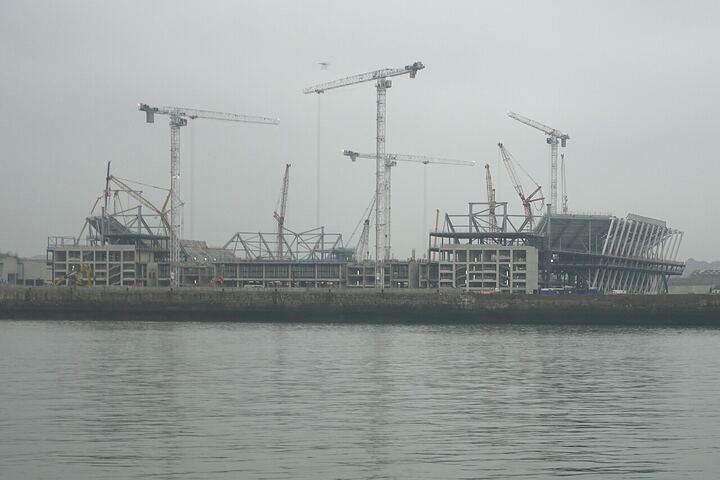
Note on timing: Everton are building a new stadium at Bramley-Moore Dock on Liverpool's waterfront, with a planned move in the near future. If visiting Goodison is on your list, do not wait too long. The new ground will be modern and impressive, but the old ground has an atmosphere that cannot be replicated.
Getting there: Goodison is in Walton, about two miles north of the city centre. Like Anfield, there is no direct rail link. Bus routes 19 and 20 from the city centre take about 20 minutes. Walking from Lime Street takes around 35 minutes. A taxi is £8-10.
Tickets: Everton are more accessible than Liverpool. Membership is inexpensive and opens most league games to general sale. Midweek fixtures and matches against lower-table opposition are usually available. Prices start from about £30, making Goodison one of the better-value Premier League matchdays.
Nearby pubs: The Winslow on Goodison Road is the classic Everton pub — it sits directly opposite the ground and fills up hours before kick-off. The Thomas Frost on Walton Road is a Wetherspoons with cheap pints and a mixed crowd. For a quieter option, The Royal Oak on Walton Lane is a short walk away.
The Merseyside derby
The Merseyside derby between Liverpool and Everton is the longest-running top-flight derby in English football. Unlike some rivalries, it is not geographically tribal — families in Liverpool are routinely split between red and blue. The atmosphere at derby matches is intense but carries a different energy to, say, a north London or Manchester derby. There is genuine animosity on the pitch, but in the stands and on the streets, the two sets of fans share space with a familiarity that comes from being neighbours.
Derby tickets are among the hardest to get for either club. Your realistic options are hospitality or knowing someone with a season ticket. If you happen to be in Liverpool on derby weekend without a ticket, watching in a city-centre pub is a legitimate alternative — The Sandon (Liverpool) or The Winslow (Everton) for partisan atmospheres, or somewhere like McCooley's on Concert Square for a mixed crowd.
Beyond the Premier League
Liverpool's football ecosystem extends beyond the two Premier League clubs. Tranmere Rovers play across the Mersey in Birkenhead — Prenton Park holds 16,500 and is easily reachable by the Merseyrail tunnel. Marine FC in Crosby play in the National League North and gained fame for hosting Tottenham in the FA Cup third round in 2021. For lower-league groundhoppers, these clubs add depth to a Merseyside weekend.
Planning a Liverpool football weekend
Friday evening: Arrive in Liverpool. The city centre is compact and walkable. Check into a hotel around Bold Street or the Albert Dock area. Have a pint at The Philharmonic Dining Rooms on Hope Street — one of the most ornate pubs in England, and a good place to absorb the city's energy.
Saturday: Matchday. If Liverpool or Everton have a 3pm kick-off, head to the ground area by 1pm. Take the bus or walk through the residential streets — the walk itself is part of the experience. After the match, head back to the city centre for food. Bold Street has excellent restaurants ranging from cheap eats to upmarket. The Baltic Triangle area has good bars for the evening.
Sunday: If there is a second match (Liverpool play Saturday, Everton play Sunday, or vice versa), you have a genuine double-header weekend — two Premier League grounds in 48 hours, barely a mile apart. If not, the Anfield stadium tour runs on non-matchdays and is one of the better club tours in England. The walk through the tunnel onto the pitch, looking up at the empty Kop, is worth the ticket price alone.
Getting to Liverpool: Liverpool Lime Street is well connected by rail — two hours from London Euston, one hour from Manchester Piccadilly, 45 minutes from Leeds. Liverpool John Lennon Airport serves European budget airlines. Manchester Airport is an hour away by train and has wider international connections.
Getting around: The city centre is walkable. For Anfield and Goodison, budget 20 minutes by bus or taxi. The Merseyrail network covers the wider Merseyside area if you want to visit Tranmere or explore the Wirral.
What makes Liverpool special
Every English football city has its own character. London has quantity — more clubs per square mile than anywhere. Manchester has the drama of two global clubs in direct opposition. Liverpool has something different: depth. The football culture here is not a layer on top of the city — it is woven through everything. Taxi drivers will give you unprompted tactical analysis. The radio phone-ins are theatre. The murals on the buildings near Anfield are not corporate installations — they were painted by locals who grew up on those streets.
With Everton's move to Bramley-Moore Dock underway, the Goodison Park you can visit today will not exist much longer — this is a now-or-never window for one of the most historic grounds in English football. Two historic grounds, half a mile apart, in a city that lives and breathes the game. If you are building your football journey and have not been to Liverpool yet, move it to the top of the list.
Track your Merseyside matches with Footbeen — log every ground, build your map, and see your stats grow. Free on iOS and Android.
Keep reading

Start your football journey
Free · iOS & Android · match search ready when you are
 Scan with your phone