Football travel: a fan's guide to watching La Liga in Spain
Plan Spain around confirmed kickoff windows
Spain rewards rail-based city pairs, but late fixture confirmation can punish rigid travel. Anchor the city first and keep the match combination flexible.
For the current season, make these three checks before acting:
Use Madrid, Barcelona or Valencia as a transport base.
Wait before locking the inter-city leg.
Keep one Segunda or local alternative.
Check the 2026/27 Fixture Calendar against the official competition or club.
Keep a second match visible through the Football Match Map.
Continue from plan spain around confirmed kickoff windows with the relevant Footbeen planner only after the article has answered the immediate question.
Why Spain is one of the best football trips you can take
Spain is a country where football is not a weekend hobby but a daily fact of life. Every city has a club, every club has a bar where the regulars argue about the starting eleven, and every matchday has a rhythm that feels entirely different from the English or German equivalent. Kick-off times are late — often 9 p.m. or later — which means your entire day is free for the city itself before you walk to the ground.
The atmosphere in La Liga stadiums varies wildly. Athletic Bilbao's San Mames is as intense as anything in the Premier League. A Monday-night game at a mid-table club might feel quiet, but the quality on the pitch is still absurdly high. This is a league where even the 15th-placed side plays passing football that most countries reserve for the top four.
Then there's the practical side. Ticket prices in Spain are genuinely affordable for most fixtures — far cheaper than England, often cheaper than Germany. The weather, especially from September to November and March to May, is close to perfect. Domestic travel is fast and cheap thanks to the AVE high-speed rail network. And the food alone justifies the trip, even without the football.
The must-visit stadiums
Spotify Camp Nou, Barcelona
The largest stadium in Europe, currently in the final stages of its massive renovation, is the ground every football fan puts at the top of the list. Even during the rebuild years the atmosphere on European nights has been electric. When the full 105,000-capacity Camp Nou reopens, it will be unlike anything else on the continent. Book months ahead — Barcelona rarely have unsold seats for league matches, let alone Champions League ties.
Santiago Bernabeu, Madrid
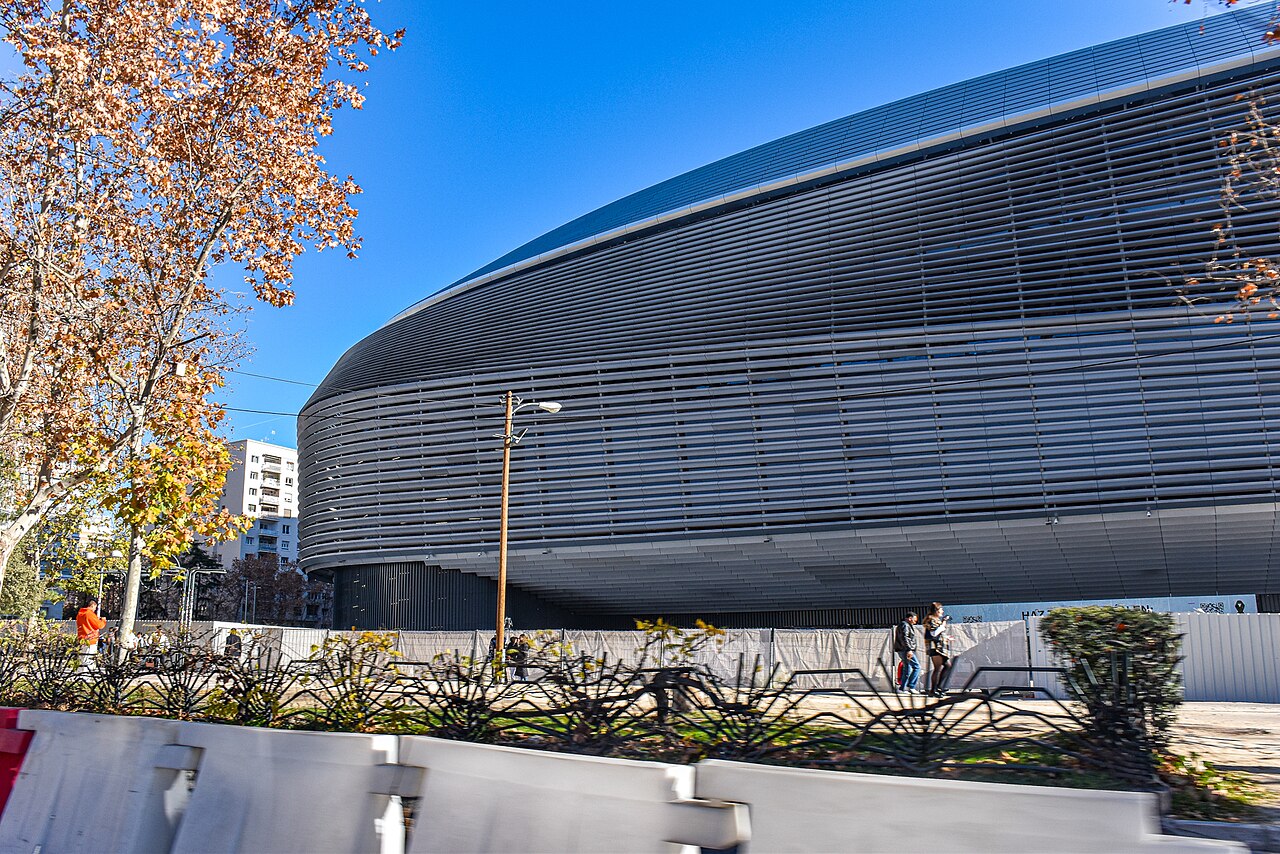
Real Madrid's rebuilt Bernabeu is a stadium that looks like it belongs in a science-fiction film — the retractable roof, the 360-degree screen, the pitch that slides out for concerts. As a football ground, it is enormous, loud in the right sections, and carries the weight of more European Cups than anywhere else on Earth. Tickets for big fixtures sell out quickly, but lower-demand league games are more realistic if you watch the official sale window. See the Santiago Bernabéu matchday guide for the full breakdown on tickets, transport, and what to expect.
Mestalla, Valencia
Mestalla is the old-school La Liga experience. The stands are steep, close to the pitch, and the acoustics make 40,000 people sound like 70,000. It's in the middle of the city — you can walk from the old town to your seat in twenty minutes. Valencia has one of the most passionate fanbases in Spain, and Mestalla on a European night is genuinely one of the best atmospheres in world football. Visit before the long-planned move to Nou Mestalla finally happens.
San Mames, Bilbao
Athletic Club's home is modern, beautiful, and ferociously loud. The Basque club's unique policy of only signing players from the region gives every match a local intensity that bigger clubs can't replicate. The stadium itself, opened in 2013, has a translucent facade that glows on matchdays. Bilbao as a city is compact, walkable, and has the best food in Spain — which is saying something. San Mames is the ground that groundhoppers consistently rate as their favourite in La Liga.
Ramon Sanchez-Pizjuan, Seville
Sevilla FC's home is a cauldron. The Seville derby against Real Betis is one of the most intense fixtures in European football, but even a routine league match here has an edge to it. The stadium sits in the Nervion neighbourhood, surrounded by bars that fill up hours before kick-off. Seville's climate means evening matches in spring feel like a privilege — warm air, open sky, and a crowd that sings from the first whistle.
Reale Arena (Anoeta), San Sebastian
Real Sociedad's ground was renovated in 2019 and is now a tight, enclosed bowl that traps noise brilliantly. San Sebastian itself is one of the most beautiful cities in Europe — Basque coast, pintxos bars, surf beaches. Combining a La Liga match with a weekend in San Sebastian is one of the best football trips on the continent, full stop. The club has been consistently competitive in recent seasons, so the football is good too.
Estadi Olimpic Lluis Companys (Montjuic), Barcelona
Barcelona's temporary home during the Camp Nou renovation sits on Montjuic hill overlooking the city. It's a 50,000-seat Olympic stadium from 1992 with open views across Barcelona's skyline. The setting is spectacular even if the stadium wasn't designed for football. If you visit while Barca are still playing here, you'll have a genuinely unique experience that no one will be able to repeat once Camp Nou reopens.
Getting tickets
La Liga ticketing works differently from the Premier League. Most clubs sell directly through their own websites — there is no centralised league ticketing platform. For the biggest clubs (Barcelona, Real Madrid, Atletico Madrid), you'll often need to create an account on the club's site and buy during the general sale window, which usually opens two to four weeks before the match.
The socios system is central to Spanish football. Season ticket holders — socios — get priority, and at some clubs they account for the vast majority of seats. This means that for derbies, European nights, and clasicos, the general public allocation can be tiny. For these fixtures, official resale platforms (Barcelona has one built into their site) or hospitality packages are often the only reliable route.
For mid-table and lower-profile fixtures, tickets are usually available on matchday at the stadium box office. Prices range from around 25 EUR for a seat behind the goal to 80-120 EUR for a decent sideline view. Cup matches and early Copa del Rey rounds are even cheaper. Planning ahead still helps, but La Liga is far more accessible than most visitors expect.
Travel logistics
Spain's high-speed AVE trains are the backbone of any football trip. Madrid to Barcelona takes 2 hours 30 minutes. Madrid to Seville is 2 hours 20 minutes. Madrid to Valencia is about 1 hour 40 minutes. Prices start from around 25 EUR if you book early on the Renfe website. This makes Madrid the natural hub — you can day-trip to several major football cities from a single base.
Internal flights are cheap and frequent. Vueling, Iberia Express, and Ryanair connect every major city for 20-60 EUR if booked in advance. For Bilbao and San Sebastian, flying into Bilbao airport is the easiest option from outside Spain. Barcelona's El Prat airport is one of the best-connected in Europe.
Rental cars make sense if you're planning to visit smaller clubs or want to combine multiple cities outside the AVE network. Driving in Spanish cities is manageable, though parking near stadiums on matchday requires arriving early. For a pure groundhopping trip hitting three or four cities, trains will almost always be faster and less stressful than driving.
Budget guide
Spain is significantly cheaper than England or northern Europe for a football trip. Here's what to expect per day, based on a mid-range budget:
Match ticket: 25-80 EUR for most La Liga fixtures. Big matches (clasico, derbies) can reach 150-300 EUR on resale.
Accommodation: 60-120 EUR per night for a decent hotel in Madrid, Barcelona, or Seville. Budget hostels from 20-35 EUR.
Food: 10-15 EUR for a solid menu del dia lunch. Tapas dinner with drinks for 20-30 EUR. Pre-match beers at a bar near the ground for 2-3 EUR each.
Transport: AVE trains 25-70 EUR between cities. Metro and bus within cities is 1.50-2 EUR per ride.
Daily total: A realistic budget is 100-180 EUR per day including the match, or 80-130 EUR on non-matchdays.
A long weekend — fly in Thursday, two matches Friday and Sunday, fly home Monday — can be done for under 500 EUR including flights from most European cities. That's less than a single Premier League away day with an overnight stay in London.
When to go
The La Liga season runs from mid-August to late May. The best windows for a football trip are:
September-October: The season is underway, the weather is warm but not unbearable (especially in the south), and Champions League group stages add midweek fixtures. Tourist crowds have thinned out.
March-April: The title race and European knockouts are heating up. Spring weather across Spain is ideal. This is peak football travel season for a reason.
January: Quieter, cheaper flights and hotels, and the Copa del Rey rounds offer extra midweek matches. It can be cold in Madrid and Bilbao, but Seville and Valencia stay mild.
Derbies to target if you can: Sevilla vs Real Betis (the most intense derby in Spain), El Clasico (Barcelona vs Real Madrid), Athletic Bilbao vs Real Sociedad (the Basque derby), and Atletico Madrid vs Real Madrid (the Madrid derby). These fixtures sell out fast, but they are worth every bit of effort to attend. For city-specific advice, our Barcelona stadium guide covers the Camp Nou rebuild and how to see both Barca and Espanyol in one weekend.
Logging your Spanish matches
A football trip to Spain is exactly the kind of journey that deserves to be recorded properly. Three stadiums in four days, different cities, different leagues if you catch a Segunda Division match on the way — that's a chapter in your football life, not just a holiday.
Footbeen lets you search the available La Liga, Segunda División, Copa del Rey and Spanish Super Cup match catalogue. Log each match as you leave the stadium — the score, the ground, the competition — and your European stadium map fills in another country. Your stats update automatically: stadiums visited, countries ticked off, goals seen.
The point of logging isn't just numbers. It's so that in three years' time, when someone asks about Mestalla or San Mames, you can pull up the exact date, the exact score, and remember the evening clearly. Footbeen is free on iOS and Android — start logging before you land.
Keep reading

Keep your football journey in Footbeen
Log the matches you attend, save every stadium and build a record that grows with every trip.
 Scan with your phone