15 football stadiums in Europe every fan should visit (2026 bucket list)
Why these fifteen?
This isn't a ranking of the biggest or the newest. It's a list of grounds where the experience — the noise, the architecture, the neighbourhood, the feeling when you walk through the turnstile — makes the trip worth it on its own. We've spread the picks across nine countries, from England to Serbia, because the best bucket list takes you to places you wouldn't otherwise go.
For each stadium we've included a practical tip: how to get tickets, when to visit, what to know before you arrive. Groundhopping is better when you plan just enough to avoid disappointment but not so much that it kills the spontaneity.
Use the football stadium tracker for grounds you have already visited and keep future trip ideas in a separate list. These guides can help organise a project around the Stadium Bucket List challenge, the World Cup 2026 knockout stadiums, the Champions League Final 2027 or the Euro 2028 Final. A venue guide is not a confirmed match ticket.
England
1. Old Trafford — Manchester
Old Trafford is Manchester United’s home in England, with red stands and the approach along Sir Matt Busby Way. Its long club history makes it a distinctive stop on a stadium trip. Check the view from your chosen seat and the current matchday guidance before buying.
European nights and local derbies can be especially atmospheric. Before booking travel, check Manchester United’s official membership options, match-specific sale dates and eligibility. Membership can provide access to ticket sales, but it does not guarantee a seat.
Before you book, read the Old Trafford matchday guide for visiting fans for tram routes, pubs, the away end, and how to plan the day around Manchester.
2. Anfield — Liverpool
Anfield belongs in our selection for the Kop and the club’s singing traditions. Liverpool’s ground has been expanded in recent years. A confirmed home game can offer a memorable visit, with the view and experience depending on your seat and fixture.
Tickets can be scarce. Check Liverpool’s current ALL RED membership, registration and sale requirements for the fixture you want. Official hospitality is another option when available; neither a ballot entry nor membership guarantees a ticket.
3. Emirates Stadium — London
The Emirates is Arsenal’s modern home in north London. Check the seating plan and any restricted-view information for the specific seat before buying; different sections offer different perspectives on the pitch.
London is expensive, but the matchday itself doesn't have to be. Domestic cup fixtures can offer another route to a visit, depending on the opponent and the club's ticket-sale rules. Check Arsenal's official fixture list and ticket information before choosing a match.
4. Wembley Stadium — London
Wembley is England’s national stadium rather than a club ground. Its calendar includes England internationals, FA Cup finals and NFL games. The arch and the approach along Olympic Way give a visit its own character; choose the event and ticket category that suit your trip.
Availability and prices depend on the event. For an FA Cup semi-final, check the competing club’s official allocation and eligibility announcement. A large stadium does not mean tickets will reach general sale.
Spain
5. Camp Nou — Barcelona
Camp Nou has been undergoing renovation, but even in its transitional state, the sheer scale of Barcelona's home is staggering. The renovation and phased reopening affect usable capacity and access. Check Barcelona's official fixture and ticket information for the configuration available on your matchday; do not assume the old full capacity is available. La Liga football at Camp Nou is technical, fast, and played in front of a crowd that responds to passing sequences like an orchestra responding to a conductor.
Check the official Barcelona fixture and ticket pages before booking, including the venue, confirmed kick-off and current stadium configuration. High-demand matches have their own sale conditions; use the club’s official channels and do not assume that unofficial resale is necessary or safe.
6. Santiago Bernabeu — Madrid
The renovated Bernabéu is Real Madrid’s home in Spain. A match and a stadium tour are separate bookings with different access. Check the current programme and available visitor areas rather than assuming the renovation provides unrestricted access.
Madrid is a strong choice for a football weekend. A Bernabéu visit and an Atlético match can fit into one trip if the confirmed fixture dates allow it. Check each club’s current ticket-sale phases rather than assuming a fixed opening date for non-members.
Italy
7. San Siro — Milan
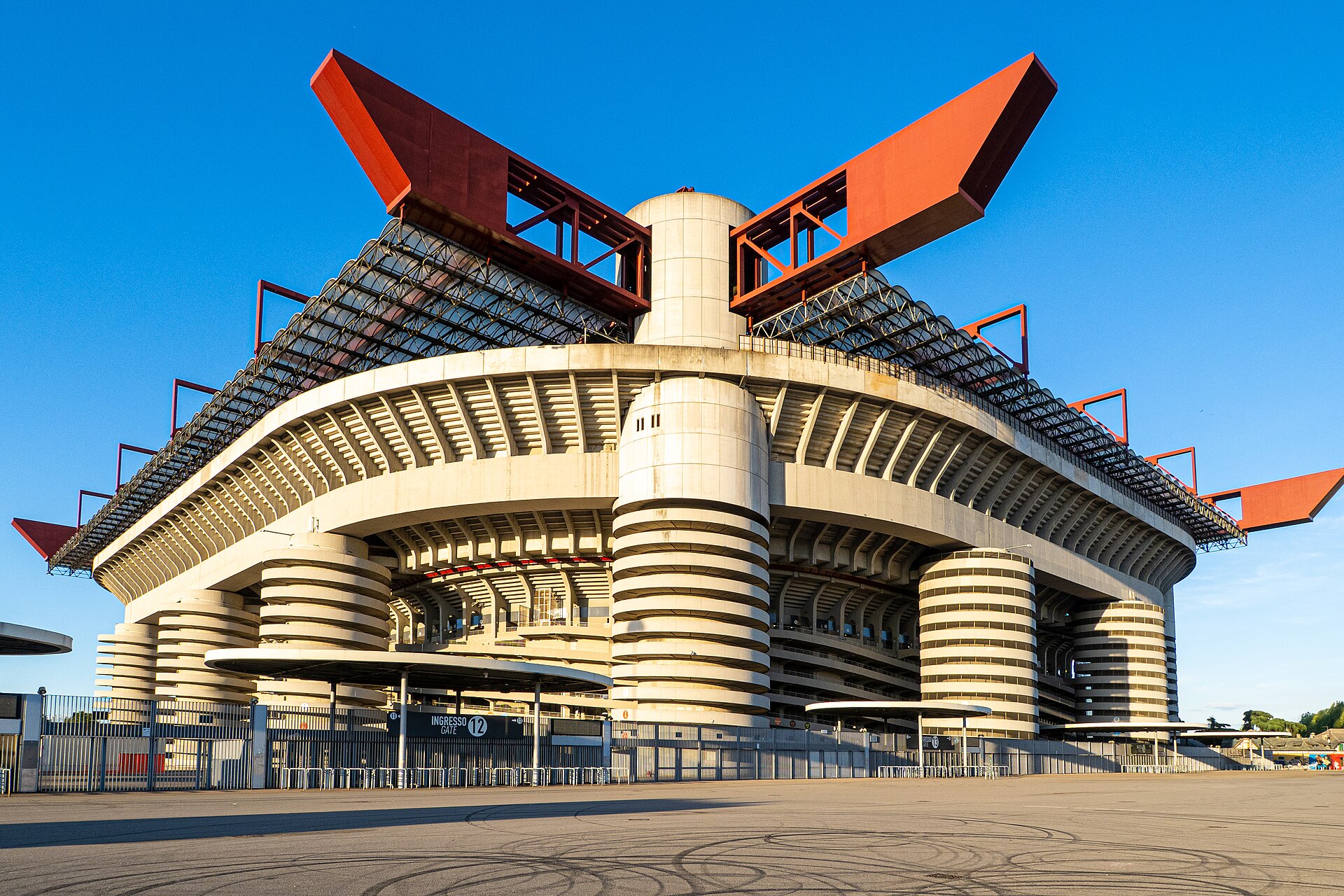
San Siro is shared by AC Milan and Inter. Its external towers, upper tiers and roof give it a recognisable silhouette, shaped by successive expansions since its opening in 1926. Seeing a match here offers a setting quite different from a newly built arena.
For a Serie A visit, use Milan’s or Inter’s official information for the chosen fixture. Check ticket availability, restrictions and the view from the offered tier. Plan public transport to San Siro Stadio and your return after the match.
8. Stadio Olimpico — Rome
Roma and Lazio share the Olimpico, where their city derby is played. The athletics track puts the stands farther from the pitch than at a football-only ground. Roma’s Curva Sud and Lazio’s Curva Nord are important to each club’s supporter identity. For a trip to Italy, check the section and supporter rules for the chosen match.
A derby can be memorable, but even a routine league match gives you a reason to explore Rome. Buy through the clubs’ official ticket channels. The Olimpico is in the Foro Italico, north of the centre; Roma’s transport guidance suggests Metro A to Flaminio and tram 2 to Piazza Mancini, followed by a walk, or Metro A to Ottaviano and bus 32. Check current service changes before travelling.
Germany
9. Signal Iduna Park — Dortmund
Dortmund’s south stand, known as the Yellow Wall, can accommodate around 25,000 standing supporters in its domestic match configuration. It is a distinctive part of the stadium’s identity. Dortmund plays Bundesliga football in Germany; confirm the permitted standing or seated configuration with the club for your chosen fixture.
South-stand tickets are highly sought after. Check Borussia Dortmund’s current sale conditions and prices instead of assuming standing or seated tickets will be available. The club lists Stadtbahn U45 from the Hauptbahnhof towards Stadion/Westfalenhallen among its public-transport options; allow time for matchday crowds.
10. Allianz Arena — Munich
The Allianz Arena’s inflated ETFE panels make it unmistakable. Its LED façade can display many colours, with lighting programmes for matchdays and special occasions. Inside, Bayern Munich’s home has steep tiers and around 75,000 places for domestic matches; the permitted configuration depends on the competition.
Check Bayern’s official sale and authorised-resale conditions for the chosen fixture before booking travel. December can offer a winter football trip, but confirm the date and tickets rather than assuming a European home game will coincide with your visit.
France
11. Stade Velodrome — Marseille
The Vélodrome is Olympique de Marseille’s home in France, with covered stands and supporter ends central to its identity. A Ligue 1 visit can be memorable, but the atmosphere depends on the match and section. Choose a ticket using the club’s official seating and access information.
Compare current rail schedules and fares between Paris and Marseille: journey times vary by service. Check OM’s official ticket conditions and leave time to explore the city.
Scotland
12. Celtic Park — Glasgow
Celtic Park holds around 60,000 spectators, and European nights can be especially intense. The club’s safe-standing provision adds to the domestic matchday experience; check the conditions and configuration for your fixture. Glasgow takes its football seriously, and Celtic’s ground is a strong introduction to that culture.
Compare current fares and confirmed fixtures before planning a Glasgow trip. Ticket access for Scottish Premiership matches depends on Celtic’s sale conditions and availability. Leave time to eat in the city before heading to the ground.
For a second Glasgow target, add Ibrox Stadium and Rangers to the same trip plan, then check the Scottish Premiership page once the fixture shape matters.
Netherlands
13. De Kuip — Rotterdam
De Kuip opened in 1937 and remains Feyenoord’s home in the Netherlands. Its distinctive stands and long football history offer a different setting from a new arena. Check the matchday configuration and ticket location rather than assuming derby availability or a particular view.
Check current rail schedules from Schiphol to Rotterdam rather than relying on a fixed journey time. De Kuip’s official access guide lists nearby tram and train stops and recommends planning through 9292 or RET. Check Feyenoord’s match-specific ticket availability before booking your trip.
Portugal
14. Estadio da Luz — Lisbon
Benfica’s Estádio da Luz in Portugal opened in 2003 ahead of Euro 2004. The covered ground is a starting point for a Lisbon football trip. Sporting and Belenenses offer other club histories in the city, but each venue needs its own route and fixture check.
Compare Benfica’s and Sporting’s confirmed fixtures, prices and eligibility before planning two games in Lisbon. Dates and travel times must work together; low prices and easy access are not guaranteed.
Serbia
15. Rajko Mitic Stadium — Belgrade
The Rajko Mitić Stadium, often called the Marakana, is Red Star Belgrade’s home in Serbia. A fixture against Partizan brings the city’s rivalry into the stadium, but ticket eligibility and supporter arrangements require particular attention. Choose the match and section through official club guidance.
Compare current transport and accommodation prices before choosing Belgrade. For the Eternal Derby, check the clubs’ official sale information, visiting-supporter arrangements and security guidance. Do not assume very cheap tickets or access to a particular away section.
Planning your stadium bucket list
Fifteen grounds across nine countries is a project, not a weekend. A few things that make the logistics easier:
Group grounds by geography: Milan and Turin in one trip, or Madrid and Barcelona in another. London offers the Emirates, Wembley and other club grounds across the city. Check the route, journey time and fixture dates before planning a double.
Champions League away days in the league phase run from September into January. Check confirmed fixtures and official ticket availability before planning a midweek visit. A European match and a domestic weekend game can fit into one trip if dates, venues and journeys allow it.
Don't chase only the giants. De Kuip, Celtic Park, and the Marakana are on this list because atmosphere isn't proportional to budget. Compare the current fixture prices and travel costs rather than relying on a historical bargain price.
Keep personal match notes before the details fade. Record the date, score, seat, weather and a memorable moment. Our guide to tracking attended matches explains how to organise that record.
Track your bucket list
Keep your travel plans alongside a record of actual visits. With Footbeen, log matches you have attended and follow your visited stadiums and countries on your personal map. Search the available catalogue when planning, then record each match after you attend it.
Whether you're ticking off your third stadium or your thirtieth, the map is the thing that turns a collection of matchdays into a story. Download Footbeen free on iOS and Android and start building your football journey.
Ready to turn this list into a proper challenge? Take on the Stadium Bucket List to track your progress across Europe's iconic grounds, and use the Football Travel Planner to find upcoming matches near the cities you're visiting.
Planning around future tournament finals too? Keep the Champions League Final 2030 venue watchlist and the Euro 2028 ticket timing guide separate from confirmed match tickets; both are useful planning prompts, not reasons to pay unofficial sellers early.
If a match ticket is not available, compare best football stadium tours in Europe and best football museums in Europe. A tour or museum visit is a football outing, but it is not an attended match.
Champions League league-phase format: UEFA official explanation.
Keep reading

Keep your football journey in Footbeen
Log matches you have attended and build a record of the stadiums you have visited.
 Scan with your phone