Westfalenstadion: the complete matchday guide for visiting fans
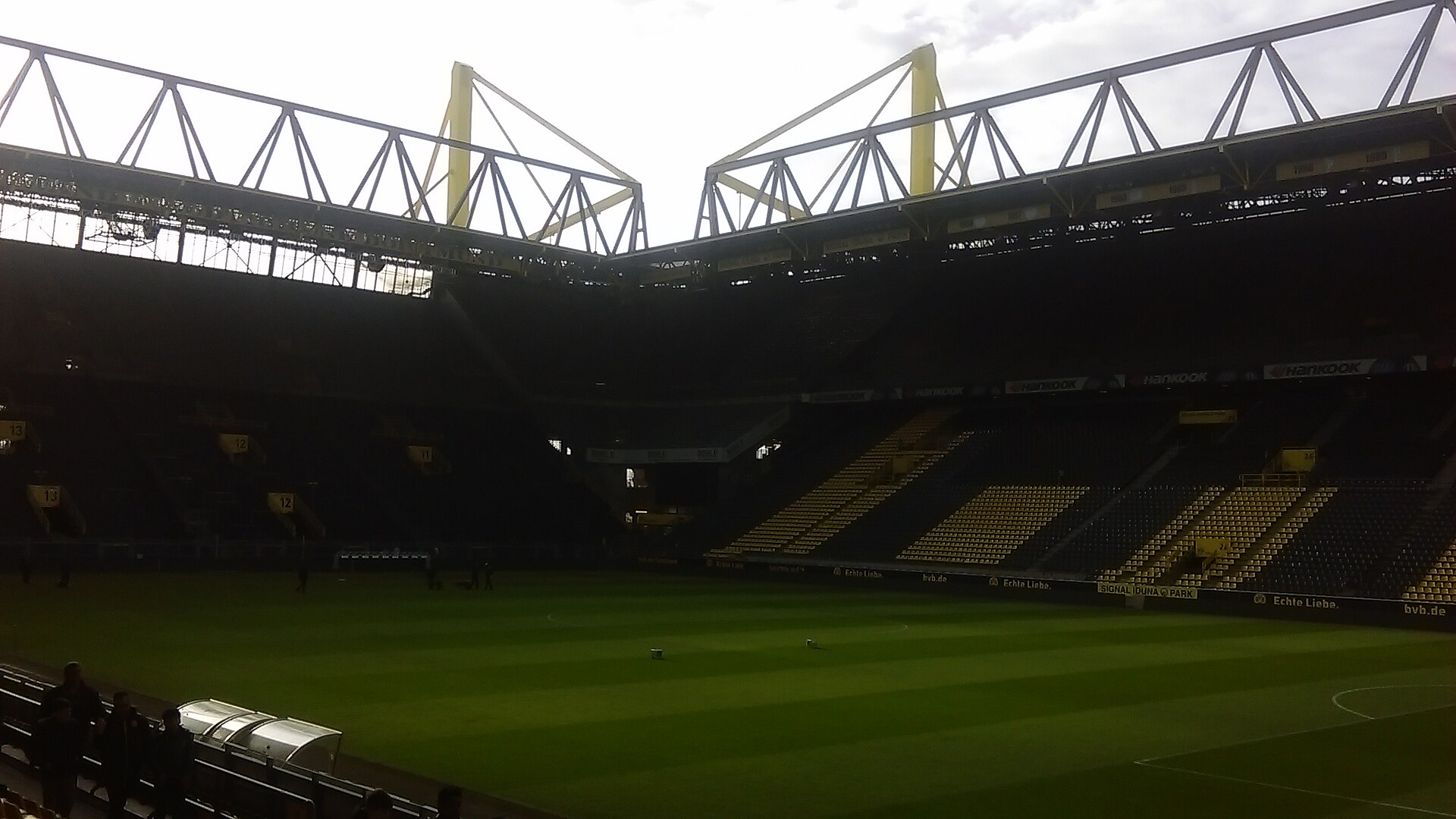
The Westfalenstadion is the reason many groundhoppers book a weekend in the Ruhr. Home to Borussia Dortmund, officially listed as BVB Stadion Dortmund in Footbeen and known commercially as Signal Iduna Park, it is one of Europe's great attendance benchmarks. The Sudtribune - the Yellow Wall - is the headline, but the full Bundesliga matchday is what makes Dortmund worth planning properly.
This guide covers what to expect, how to get there, how tickets work, and how to make the most of a Dortmund matchday without relying on last-minute luck. Always check BVB's own match information before you travel, because entrance areas, ticket conditions, and away-fan instructions can change by fixture.
The stadium and the Yellow Wall
The Westfalenstadion, currently known as Signal Iduna Park for sponsorship reasons, is listed by BVB at 81,365 capacity, making it Germany's largest football stadium. The Sudtribune dominates the south end and is widely described as Europe's largest standing terrace. When full, it is one of the most impressive sights in football.
BVB's current entry guidance says away-fan ticket holders use different entrances depending on the blocks assigned for that fixture. The key point is simple: follow the entrance printed on your ticket and the visiting club's fan information. The away section gives you a direct sightline to the Yellow Wall rather than a place on it. That is the trade-off. Home fans get the terrace; away fans get the view of the noise.
The stadium is steep, loud, and purpose-built for football. Even in the upper tiers, you still feel connected to the pitch. The roof holds the sound in, and when the south end moves, the rest of the ground feels it.
Getting to Dortmund
Dortmund is in the centre of the Ruhr, Germany's industrial heartland. It is well connected by rail and has a smaller airport with European routes. The trip is usually easiest when you think in terms of the wider Ruhr rather than Dortmund alone: Dusseldorf, Cologne/Bonn, Essen, Bochum, Gelsenkirchen, and Dortmund all sit inside a dense transport region.
By air Dortmund Airport is close to the city, and BVB lists the stadium as 12 km from the airport. Many visitors also fly into Dusseldorf or Cologne/Bonn and continue by train. Check the rail route before booking, especially on weekends with engineering work.
By train Dortmund Hauptbahnhof is a major hub. Long-distance trains connect Dortmund with the rest of Germany, while regional services cover the Ruhr. For groundhoppers planning a multi-match weekend, the density of clubs in this region makes rail travel practical.
From the Hauptbahnhof, you can continue by Stadtbahn, regional rail, or on foot if you want a longer pre-match walk through the city.
Local transport BVB identifies the U45 as the main Stadtbahn line between Hauptbahnhof and the stadium area on matchdays, with U42 and U46 also useful depending on where you start. Stadion, Westfalenhallen, and Theodor-Fliedner-Heim are the station names to know. Services are busy before and after the match, so leave slack in both directions.
Do not assume your match ticket automatically covers every local journey. BVB says season tickets include public transport in North Rhine-Westphalia on matchday until 3am the next day, but digital tickets may need a separate DSW21 ticket. VRR also states that event tickets only work as KombiTickets when they are clearly marked. Check your ticket wording before travel and buy local transport separately if it is not included.
Tickets and allocation
Dortmund sell out many home matches. The club uses priority windows, and high-demand fixtures are difficult for casual visitors. For visiting fans, allocation is controlled through the visiting club and varies by competition, fixture, and the exact ticket contingent requested.
Home tickets If you want to experience the Yellow Wall, you need a standing ticket on the Sudtribune. These are in heavy demand and usually go through club sales channels before any wider availability. Non-members should use official BVB channels and be realistic: for major fixtures, a normal seat or hospitality package may be the only reliable route.
Standing tickets on the Sudtribune are generally cheaper than seats, but you need to arrive early to settle into a good spot. The terrace fills from the bottom up. Latecomers can still have a memorable view, but the best positions are gone quickly.
Away tickets Visiting fans should apply through their own club. Avoid assuming a fixed away allocation: BVB's own guidance says the shape of away tickets can change depending on club arrangements and the size of the contingent requested by the visiting club. Your visiting club's fan liaison notes are the authority for entrance, meeting points, accepted fan materials, and ticket collection.
Hospitality and neutral sections Some neutral seats are available through hospitality packages. These are expensive but can be the most reliable route if you are travelling purely as a groundhopper and have no club affiliation. Do not use unofficial resale as your fallback plan; German clubs are strict about ticket terms.
Matchday routine
Dortmund fans treat matchday as a full-day event. The city centre fills with supporters well before kick-off. The area around Alter Markt and Friedensplatz is busy with bars and food stalls. Many fans also gather in the Kreuzviertel, south of the stadium, where the streets are lined with pubs and food stops.
Arrival timing BVB says the stadium gates open 2.5 hours before kick-off and strongly recommends being inside no later than 1.5 hours before kick-off to avoid longer waits. Treat that as the baseline, especially if you have a standing ticket, a bag to store, or an away-section entrance with extra checks.
Security and entry Bag checks are standard. BVB's current entry rules allow only bags up to DIN A4 size with a maximum depth of 15 cm, with limited storage points for larger bags. Travel light, have your ticket ready, and follow the entrance printed on it.
Inside the ground Concourses are functional but crowded. Expect the usual German stadium staples: sausage, pretzels, beer, and soft drinks. Payment systems can be venue-specific. BVB currently describes its Stadiondeckel as the stadium payment card, while noting that away fans continue to pay cash, so carry a small amount of cash and check current visitor information before you go.
Atmosphere and etiquette
The Yellow Wall does not need an opposition to make noise. Dortmund fans sing for long stretches regardless of the score. The choreography before kick-off is worth arriving early for: large banners, coordinated displays, and the sheer scale of the south stand are the part you remember.
Visiting fans are generally well treated, though the usual precautions apply: do not wear colours in the home end, do not provoke, and accept that you are outnumbered. BVB explicitly asks fans not to wear visiting-team clothing outside the away block and bans opponent colours in BVB standing blocks plus the south-east and south-west corners.
If you are in the away section, join in with your own fans but respect the stewards. German police and security are efficient but strict. Disorder is rare; when it happens, it is dealt with quickly.
Groundhopping around Dortmund
The Ruhr is one of Europe's densest football regions. From Dortmund, regional rail makes several serious grounds realistic on the same weekend:
- Schalke 04 in Gelsenkirchen - the classic Ruhr pairing when fixtures line up
- VfL Bochum - close by regional train and a very different stadium feel
- Rot-Weiss Essen - lower-league intensity with a strong local identity
- MSV Duisburg - another Ruhr option when the calendar works
- Bayer Leverkusen - a Rhineland add-on rather than a Ruhr derby, but reachable for ambitious weekends
For a weekend trip, pairing Dortmund with Schalke or Bochum is the cleanest shape. Use the Travel Planner and Stadium Map to check fixture clusters before you book. Both grounds are very different from the Westfalenstadion: Schalke's arena is modern and enclosed, while Bochum is smaller, tighter, and more traditional.
What to log in Footbeen
After the match, log your visit in Footbeen. Record the score, your seat or standing location, and any notes on the atmosphere. Photos help, especially from the away section or the Yellow Wall. The stadium tracker is more useful when it stores practical memory as well as the badge.
If you are working through a country passport or stadium list, Dortmund is usually the anchor of a German trip. It is also a good base for a multi-match weekend across the Ruhr.
Summary
The Westfalenstadion is not just a big stadium. It is a stadium that still feels like football should feel: loud, partisan, communal, and built around supporters. The Yellow Wall is the headline, but the whole experience - the train in, the walk through the Kreuzviertel, the noise inside - is what makes the trip worthwhile.
Plan early, keep travel flexible until your ticket path is clear, and arrive with time to spare. Dortmund is one of the great European matchdays, but it rewards preparation.
FAQ
What is the official stadium name?
Many fans still call it the Westfalenstadion. The commercial name is Signal Iduna Park, and Footbeen lists the venue as BVB Stadion Dortmund.
How early should I arrive?
BVB says gates open 2.5 hours before kick-off and recommends entering by 1.5 hours before kick-off. Arrive earlier if you have a standing ticket, need bag storage, or are following away-fan entry instructions.
Does my ticket include public transport?
Only if the ticket conditions say so. BVB says season tickets include matchday public transport in North Rhine-Westphalia until 3am the next day, while some digital tickets require a separate DSW21 ticket. VRR also says event admission only works as a KombiTicket when marked accordingly.
Can away fans wear colours around the stadium?
Follow your club's fan information and BVB's entry rules. BVB asks supporters not to wear visiting-team clothing outside the away block and bans opponent colours in BVB standing blocks plus the south-east and south-west corners.
Related reads
- Bundesliga away days: the complete guide for travelling fans
- How to get football tickets abroad: a practical guide
- European groundhopping: weekend routes that work
- Football in Manchester: a stadium guide for visitors
Keep reading
- The best football museums in Europe for supporters and groundhoppers
- The best football stadium tours in Europe — and which are actually worth it
- Small football stadiums in Europe worth travelling for: intimacy over capacity
- The best football cities for stadium collectors: six trips with more than one story
Start your football journey
Free · iOS & Android · match search ready when you are
 Scan with your phone