The best football derbies in Europe — and how to plan attending one
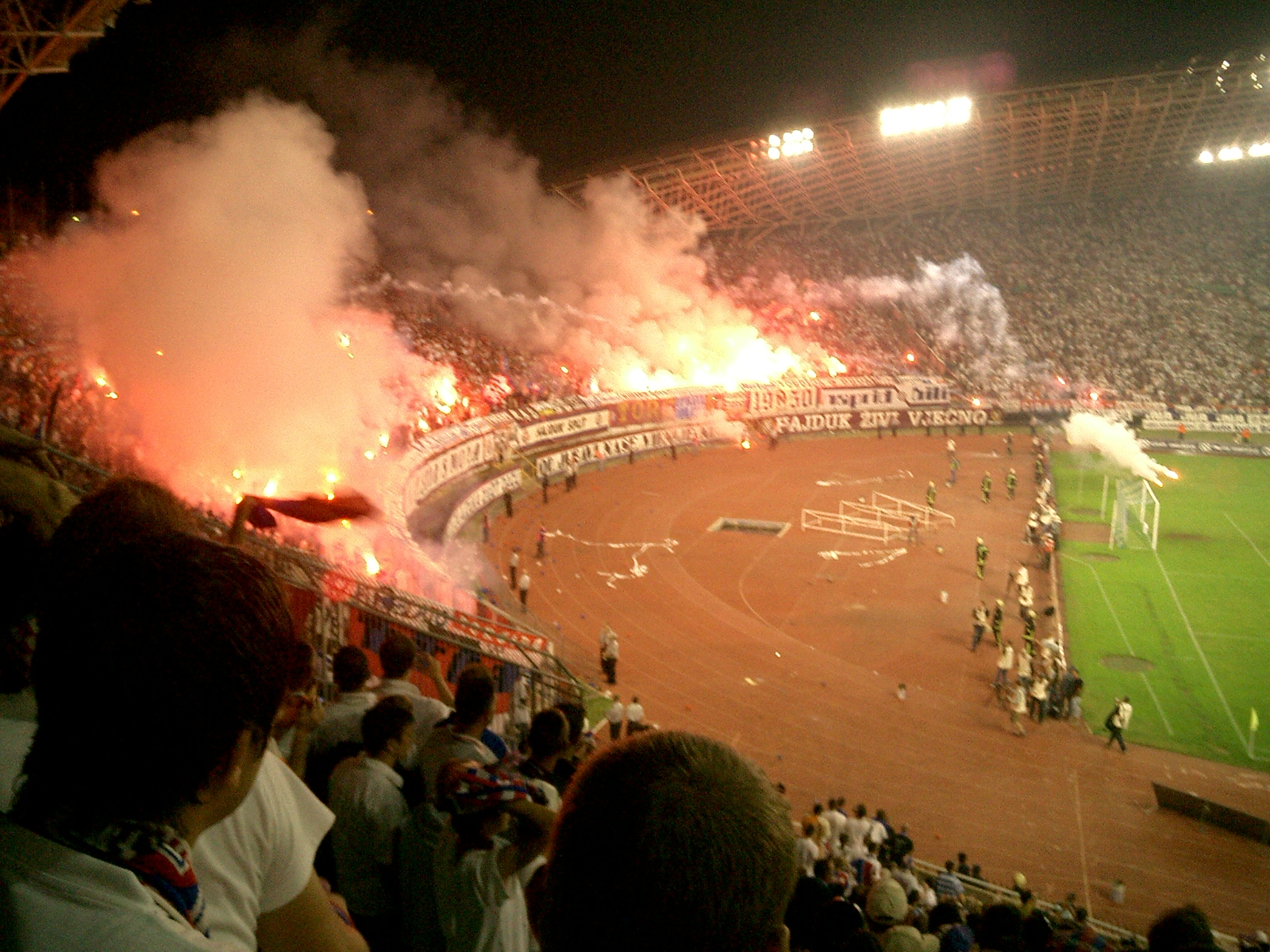
What actually makes a derby a derby
A derby is not a fixture between two famous clubs. A derby is a fixture where if you walk through the wrong neighbourhood in the wrong shirt at the wrong time of day, the wrong things happen. It's geography, history, and class — usually all three at once.
Most "best derbies" lists you'll read are written by people who've watched the derby on television. This one is written for people thinking about flying to one. We've ranked the European derbies by what we'd actually advise — atmosphere on the day, ticket reality, neighbourhood safety, and how the local fans treat away supporters who aren't from either side. There are derbies that are technically more historic than the ones at the top of this list, but if you can't realistically get a ticket, they don't count for this exercise.
Each derby gets the same five-line treatment: the rivalry in one paragraph, atmosphere reality, ticket strategy, where to be in the city before kickoff, and our take on whether you should travel for it.
El Clásico — Real Madrid vs Barcelona
Real Madrid at the Bernabéu; Barcelona at the Camp Nou. The biggest fixture in club football by every meaningful metric — viewership, broadcast rights, transfer-market consequences — and the one most likely to feature on your highlight reel for the next decade.
Atmosphere reality: Bernabéu Clásicos are a curiously quiet spectacle relative to their billing. The stadium is too big, too tourist-saturated, and the home end too dispersed for the kind of single-curva noise you get at Naples or Rome. Camp Nou is louder when Barça are winning, quiet when they aren't. If you go to one Clásico, the experience is the city on the day more than the chant book inside the ground.
Ticket strategy: away allocations for Clásicos are minimal and impossible without club membership. Home tickets via Spanish ticketing platforms exist but are eye-watering — €600+ for a corner seat. The honest play: build the trip around the Saturday match and watch in a bar near the ground.
Pre-match base: Madrid — La Latina or Lavapiés tapas crawl, then the metro to Bernabéu. Barcelona — Gràcia for vermouth and tapas before the train down to Les Corts.
Should you travel for it? Yes, once. After the first time, the Madrid Derby below is the better-value Spanish derby trip.
The Derby della Madonnina — Inter vs Milan
Inter and AC Milan at the San Siro / Giuseppe Meazza. Two clubs, one stadium, switching colours every Sunday. We covered the Madonnina at length in our Serie A stadium guide — here's the derby-specific take.
Atmosphere reality: the only derby on this list where the noise is physical. Both Curva Nord and Curva Sud go up at once, the two ends trade choreographies that have been planned for weeks, and the air itself feels heavier. If you go to one Italian fixture in your life, this is it.
Ticket strategy: more accessible than people assume. Both clubs run member-priority sales, but secondary-tier seats reach the open market for €120-180 the week before. Avoid the upper-third ring — the views are fine but the pre-match choreo is harder to see.
Pre-match base: Brera for aperitivo, then the M5 line straight to San Siro. Don't try to drive.
Should you travel for it? Yes, every couple of years. The Madonnina is the European derby with the most reliably elite atmosphere.
Derby della Capitale — Roma vs Lazio
Roma and Lazio at the Stadio Olimpico. Italian football's other ground-share, but with sharper edges than the Milan derby. A derby with class associations — Roma the working-class side, Lazio the more bourgeois — that the local fans will dispute, but the historical pattern holds.
Atmosphere reality: more visceral than Milan, because the Olimpico's two curve face each other across the running track and you can see the choreography from 200 metres. The flares, the stendardi hand-flags, the pre-match scarves all coordinate. Police presence is heavy but unobtrusive.
Ticket strategy: the Italian tessera del tifoso fan-card system makes derby tickets harder to get for visiting tourists than at the Madonnina. The most reliable route is hospitality / corporate seats from one of the official ticketing partners. Plan eight weeks ahead.
Pre-match base: Trastevere for late lunch, then the tram to Foro Italico. The walk in from the tram is part of the build-up — you'll see the choreography being prepped behind temporary fences.
Should you travel for it? Yes, but pair it with the rest of a Rome long weekend. The city is the second half of the trip.
Old Firm — Celtic vs Rangers
Celtic at Celtic Park; Rangers at Ibrox. The fixture with the longest sectarian shadow on this list — and the one with the most unpredictable matchday vibe. We've left a lot off the page here for a reason; if you go, you'll understand.
Atmosphere reality: Celtic Park's home end (the Jock Stein Stand) does the loudest spontaneous noise in British football, full stop. Ibrox is more disciplined, more structured, and louder in pre-match build-up than during play. The away end at either ground is small and tight — the segregation is real, the policing is real, and the journey into the ground is part of the experience.
Ticket strategy: away tickets are limited and reserve-list-only for both clubs. The home end is much more accessible if you have a friend who's a club member. Without one, neutrals can sometimes find seats in corporate hospitality. Don't wear neutral colours — pick a side and pick it before you book.
Pre-match base: Glasgow — Merchant City for food, then the bus or the walk to either Parkhead or Ibrox. Don't drink in any pub flying the wrong colours.
Should you travel for it? Yes — but go with someone who has been before. This is the European derby where local navigation matters most.
North London Derby — Arsenal vs Tottenham
Arsenal at the Emirates; Tottenham at the Tottenham Hotspur Stadium. The Premier League's most logistically attendable derby and the easiest first European derby for a non-British fan to add to their list.
Atmosphere reality: better at the new Tottenham ground than at the Emirates, but neither is a curva-style spectacle. English stadium architecture funnels noise differently — concentrated in the corners, more sing-led than choreo-led. The pre-match volume in the streets around either ground is genuinely a part of the experience.
Ticket strategy: the most accessible derby on this list for a tourist. Resale platforms (Twickets, official club exchanges) carry derby tickets in the £150-300 range with reasonable frequency. Plan 6-8 weeks out.
Pre-match base: Arsenal — the Tollington pub and the streets around Drayton Park. Tottenham — Bruce Grove area or the new pubs that have grown up around the rebuilt stadium.
Should you travel for it? Yes. The North London Derby is the easiest European derby to plan a long weekend around.
Merseyside Derby — Liverpool vs Everton
Liverpool at Anfield; Everton at Goodison Park (and the new stadium at Bramley-Moore Dock from late 2025 onward). The "friendly derby" reputation is mostly historical — recent fixtures have been edgier than the marketing suggests.
Atmosphere reality: Anfield Mersey derbies are the loudest you'll hear from the Kop in any non-European-night fixture. Goodison's last derby fixtures (before the stadium move) had a particular farewell-tour intensity. The new Bramley-Moore ground will need a few derbies to find its feet acoustically.
Ticket strategy: home-end tickets at Anfield require club membership and patience. The rebuilt away allocation on Bramley-Moore should make Everton-home derbies the more accessible fixture going forward.
Pre-match base: the Sandon for Liverpool home derbies; the city centre and the train to either ground.
Should you travel for it? Yes. We'd argue Mersey derbies are slightly underrated by European audiences.
Superclásico Andaluz — Real Betis vs Sevilla
Real Betis at the Estadio Benito Villamarín; Sevilla at the Ramón Sánchez-Pizjuán. Spain's most under-rated big derby — same city, two clubs, hostility tempered by the fact that everyone in Seville knows everyone.
Atmosphere reality: noisier than Madrid Derbies, more chaotic than Barcelona-Espanyol, and the stadium acoustics in both grounds funnel the choreo down onto the pitch. The fans are louder in the second half — both grounds have a third-half tradition where the curvas amp up into stoppage time even if their team is losing.
Ticket strategy: more accessible than Clásico, less accessible than Madrid Derby. Plan four weeks out via either club's website (foreign-fan window).
Pre-match base: Seville's Triana or Alameda neighbourhoods for tapas, then walk or taxi to either ground. The city is small enough that you don't need transport plans.
Should you travel for it? Yes. Seville is one of the best European cities for a long-weekend trip and the derby is the right reason to time it.
Ruhrderby — Schalke vs Borussia Dortmund
Schalke 04 at the Veltins-Arena; Borussia Dortmund at the Westfalenstadion / BVB-Stadion. Two clubs in two industrial cities thirty kilometres apart that have spent forty years insisting they are nothing alike.
Atmosphere reality: Westfalenstadion's Yellow Wall is the loudest single stand in European club football and the most photographed. On a Schalke fixture it goes up to a register that genuinely exceeds the Italian curve. Schalke's home end is smaller (the Veltins-Arena is mostly seats) but consistent.
Ticket strategy: BVB-end tickets at Westfalenstadion are the famously hard ticket to get — requiring real proof of fan-status. Stand tickets in the Yellow Wall are sold out for the season usually within hours of going on sale. Seat tickets at either ground are more accessible than Allianz Arena bookings, especially for Schalke home fixtures.
Pre-match base: the train station at either Dortmund or Gelsenkirchen, then trams running to the ground. Gelsenkirchen is the smaller city — we'd recommend Dortmund as the trip base regardless of which ground you're attending.
Should you travel for it? Yes. The Yellow Wall's noise alone is worth the airfare.
Madrid Derby — Real Madrid vs Atlético
Real Madrid at the Bernabéu; Atlético Madrid at the Riyadh Air Metropolitano. The "second" Madrid derby, but in atmosphere terms the more honest one — Atlético home derbies in particular are properly hostile in a way Clásicos aren't.
Atmosphere reality: the Metropolitano's south end (the Frente Atlético) is the loudest single end in Spanish football. The Bernabéu equivalent is muted by comparison. If you have a choice, prioritise an Atlético-home derby over a Real-home one.
Ticket strategy: Atlético derby tickets via the club's foreign-fan window are achievable with four weeks' planning. Real-side tickets are harder but not Clásico-level impossible.
Pre-match base: Madrid is a single-city derby — same La Latina / Lavapiés base for both grounds. The metro to Metropolitano is straightforward; the bus from Bernabéu post-match is the slowest part of the night.
Should you travel for it? Yes — and we'd pick this one over Clásico for value-per-pound.
How to actually plan a derby trip
Three things from experience:
Watch your team's derby first if it's possible. Going to a derby where you have no horse in the race is a different (and somewhat lesser) experience. Your team's derby is the one you remember. If you're a Liverpool fan reading this, your first derby should be Mersey, not Madonnina. Build outward from there.
Match-tickets are the smaller logistics problem. Flights and the right hotel matter more for derby weekends than for normal away days. Hotels within twenty minutes of either ground sell out 4-6 weeks in advance for the bigger derbies on this list.
The day after is the trip half no one talks about. Derby Sundays leave the city quieter and warmer the next morning. Don't fly home on the Monday morning — book the Tuesday flight, walk the city, eat the food the locals eat the day after a result. You'll come home with a better story.
For the practical side of getting tickets when you're not local — language, ID requirements, payment methods — see our companion piece on getting football tickets abroad. For the wider European travel structure, our Champions League away days guide covers the cities most derbies overlap with.
Track every derby you've attended in Footbeen — your map lights up the cities, and your record carries the result. Free on iOS and Android.
Keep reading

Start your football journey
Free · iOS & Android · match search ready when you are
 Scan with your phone