Ibrox Stadium: the complete matchday guide for visiting fans
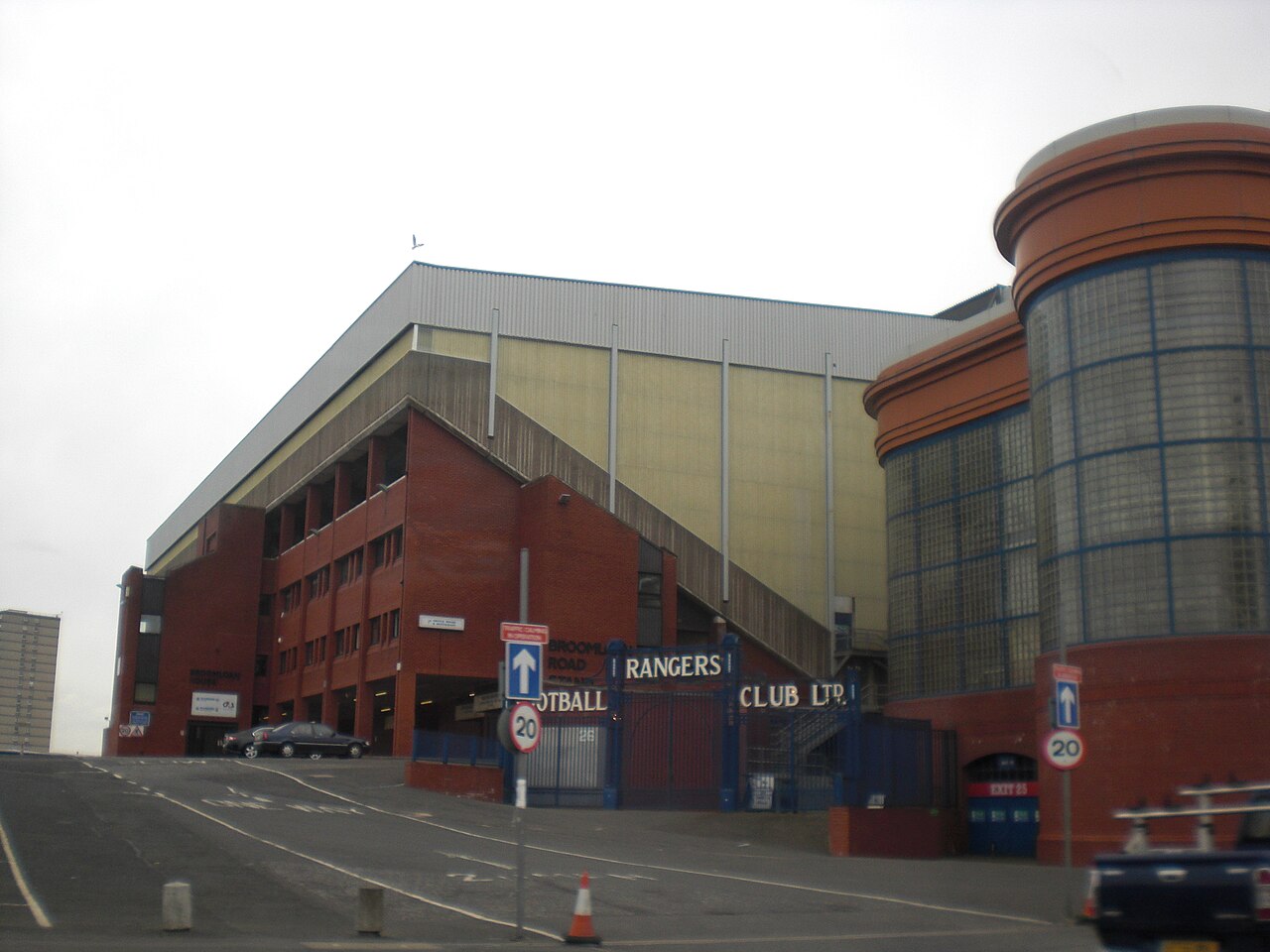
The first decision a visiting fan makes at Ibrox Stadium is made before the trip even starts: which subway station to aim for. Get that right and Ibrox is one of the easiest big grounds in Britain to reach — the Glasgow Subway drops you almost at the door. Get it wrong, or arrive with a rucksack you can't get in with, and a straightforward day out turns into twenty minutes of standing in the wrong queue on Edmiston Drive.
This guide is for the first-timer on the away allocation who needs the practical version, not a stadium history lesson: where the away section sits, why the Subway matters, what to check before travelling, and how Scottish matchdays differ from the routine many English or European visitors expect. Ibrox is not difficult, but it rewards planning.
A note on tickets first. This guide assumes you already have a ticket or are travelling on the away allocation through your own club. For Scottish Premiership league games — and domestic Scottish Cup and Scottish League Cup ties — the away end is allocated to the visiting club rather than sold to neutrals, and demand for the two Old Firm fixtures at Ibrox is in a different league entirely. If you're still chasing a ticket, don't buy from a stranger online — read how to avoid football ticket scams and how to get football tickets abroad first, even for a domestic trip, because the resale traps are the same everywhere.
Where the away end actually is
Ibrox is a tight, enclosed bowl of four covered all-seater stands: the Bill Struth Main Stand (south), the Broomloan Road Stand (west), the Sandy Jardine Stand (north) and the Copland Road Stand (east). Visiting supporters are housed in the lower tier of the Broomloan Road Stand, in the corner nearest the Govan side of the ground, below one of the big screens.
That western placement is worth knowing before you set off, because it decides which station you should use and which corner of the ground you walk towards. Published away-day guides commonly put the normal visiting allocation at around 2,500, with the Old Firm fixture against Celtic treated differently and more tightly controlled. If that's your fixture, assume the ticket is harder to get and check your own club's allocation notice rather than relying on a generic guide. The view from the away corner has a good reputation — the stands are steep and close to the pitch, so even from the back of the lower tier you feel in the game.
Sources for the away section, allocation and stand names: the Football Ground Guide entry for Ibrox and Ibrox Stadium on Wikipedia.
Getting there: the Subway is the answer
Ibrox sits in Govan, on the south side of the Clyde, and the single most useful fact for a visiting fan is that the Glasgow Subway — the little orange loop that circles the city — has a station named after the ground. There is no mainline rail station at the stadium itself, so the Subway does the heavy lifting.
- Ibrox subway station is the closest, a few minutes' walk to the ground. It is also the station every other away and home fan has the same idea about, so it gets extremely busy on matchdays; an additional entrance on Woodville Street is opened to help handle the crowds. Expect managed queuing on the way out.
- Cessnock subway station is the next stop along and is roughly a ten-minute walk to the stadium. It's the classic "avoid the crush" option, especially for the journey back after the final whistle when Ibrox station is at its busiest.
From the city centre, join the Subway at St Enoch and take the Inner Circle round to Ibrox. If you're coming into Glasgow by train, you'll arrive at Glasgow Central or Queen Street, both roughly two kilometres from the ground — walkable if you fancy it, but most people hop on the Subway for the last leg. Check the Glasgow Subway's own matchday guidance and running times before you travel, as the network has fixed operating hours and Sunday times differ.
Sources for transport: the Football Ground Guide entry for Ibrox, Ibrox Stadium on Wikipedia for the Subway stations, and the official Glasgow Subway site for fares and times. For mainline services check ScotRail.
Timing: arrive earlier than the kick-off time suggests
The thing that catches visiting fans out at Ibrox is not the ground — it's the Subway on the way in. A single small station absorbing thousands of matchday passengers means the crush builds fast in the last half hour, and it builds again the moment the whistle goes. Give yourself a buffer: aim to be through the turnstiles well before kick-off rather than timing your arrival to the minute.
Turnstile opening times, security screening and the current bag rules are the kind of detail that changes and are best confirmed close to your visit rather than taken from any guide written months earlier. Rangers publish fixture-specific matchday information, so use the latest official Ibrox matchday page in the week of the game rather than an old listing from a previous fixture. As a general rule for any modern British ground, travel light — a small bag or no bag at all avoids the search queue entirely.
What to check before you travel
Two things are worth settling before you leave, and one of them surprises visitors from south of the border every time.
Alcohol is not served to fans in the stands. In line with long-standing Scottish football regulations, you won't be able to buy a beer at your seat or on the concourse the way you can at many grounds elsewhere. This is a Scotland-wide rule, not an Ibrox quirk, so plan your pre-match drink for beforehand and don't expect a pint inside. Food and soft drinks are available on the concourse up to and around half-time.
Sort your bag and your ticket in advance. Confirm the current bag policy on the club's official channels, keep it small, and make sure you know whether your ticket is a print, a card or a phone pass before you're standing at the turnstile. A quick pre-travel checklist:
- Ticket loaded and tested, and you know the format.
- Bag small enough to clear a search, or no bag at all.
- A contactless card or phone wallet for food and the club shop.
- Your station chosen — Ibrox in, Cessnock a strong shout for the walk back.
- Kick-off time double-checked the week of the game; Scottish fixtures move for TV too.
Sources: the Football Ground Guide entry for Ibrox for the alcohol-in-stands rule, and Rangers' official matchday information pages for fixture-specific entry and payment details.
The ground itself, and the atmosphere
Ibrox holds a little over 51,000, with recent public guides putting capacity just above 51,500 after the Copland Stand work. Treat the exact number as something that can move after stadium projects, but the scale is the point: this is one of the great old grounds of British football with a modern interior. The Bill Struth Main Stand, with its red-brick facade designed by the celebrated engineer Archibald Leitch, is listed, giving the exterior a heritage that most new-builds can only envy.
Inside, it's a proper enclosed bowl. The stands are steep and tight to the pitch, the corners are filled in, and when the ground is full it generates the kind of rolling, deep noise that puts it among the loudest atmospheres in the country. From the away corner in the Broomloan you get all of it — the sightlines are excellent and the sound has nowhere to escape. If atmosphere is what you chase as a groundhopper, Ibrox belongs on the same list as the other British cauldrons; our ranking of the best football atmospheres in Europe explains why grounds built like this one keep the noise in.
Sources for capacity, the 2024 expansion and the listed Main Stand: the Football Ground Guide entry for Ibrox and Ibrox Stadium on Wikipedia.
Making a weekend of it: the Glasgow double
Ibrox has one obvious travel advantage: it's in the same city as another 50,000-plus cauldron. A trip to Ibrox pairs naturally with Celtic Park across the city for a full Glasgow football weekend, if the fixtures fall right — our Celtic Park matchday guide covers the East End side of that double. Fitting two grounds into one trip is its own small planning exercise, and how to plan a two-match football weekend walks through the fixture-timing and travel logic so you don't end up sprinting across Glasgow between kick-offs. Use the Stadium Map to see which other Scottish grounds — Edinburgh's two, or the grounds along the central belt — sit within reach of the same weekend.
If this is your first solo away trip rather than a groundhop, going to an away game alone covers the nerves and the practicalities, and planning a football away day covers the trip-shape decisions that apply to any ground in Scotland and beyond.
What to log afterwards in Footbeen
The walk back to Cessnock is when the useful details start disappearing: how long the Subway queue really took, whether the Broomloan view was better than expected, and what the ground sounded like once Rangers pushed forward. Log the match in Footbeen while those details are still fresh:
- The score and result, plus your honest rating of the game and the day out.
- A note on the things you'll forget: which station worked, how the Broomloan felt, how long the Subway queue took, whether the atmosphere matched the billing.
- Photos of the Leitch facade on the way in and your view from the away corner — the exterior shot is one of the best in British football.
- The stadium itself, so Ibrox joins your tracked list of grounds visited and, if you did the Glasgow double, sits next to Celtic Park in your record.
That record is the difference between "I went to Ibrox once" and a proper memory of the day. If you've never kept that kind of match log before, here's why tracking every match you attend is the habit that turns scattered away days into a football journey worth looking back on.
Useful sources
- Rangers FC official matchday information: rangers.co.uk — an official fixture-specific matchday page; check the latest equivalent for your match.
- Football Ground Guide — Ibrox Stadium: footballgroundguide.com — away section, allocation, and transport overview.
- Glasgow Subway: glasgowsubway.com — fares, map, and matchday running times.
- ScotRail: scotrail.co.uk — mainline train times and matchday service updates.
Always check official club and transport sources before travelling, as policies, prices, and service patterns change.
Keep reading
- The best football museums in Europe for supporters and groundhoppers
- The best football stadium tours in Europe — and which are actually worth it
- Small football stadiums in Europe worth travelling for: intimacy over capacity
- The best football cities for stadium collectors: six trips with more than one story

Start your football journey
Free · iOS & Android · match search ready when you are
 Scan with your phone