Stadio Luigi Ferraris matchday guide
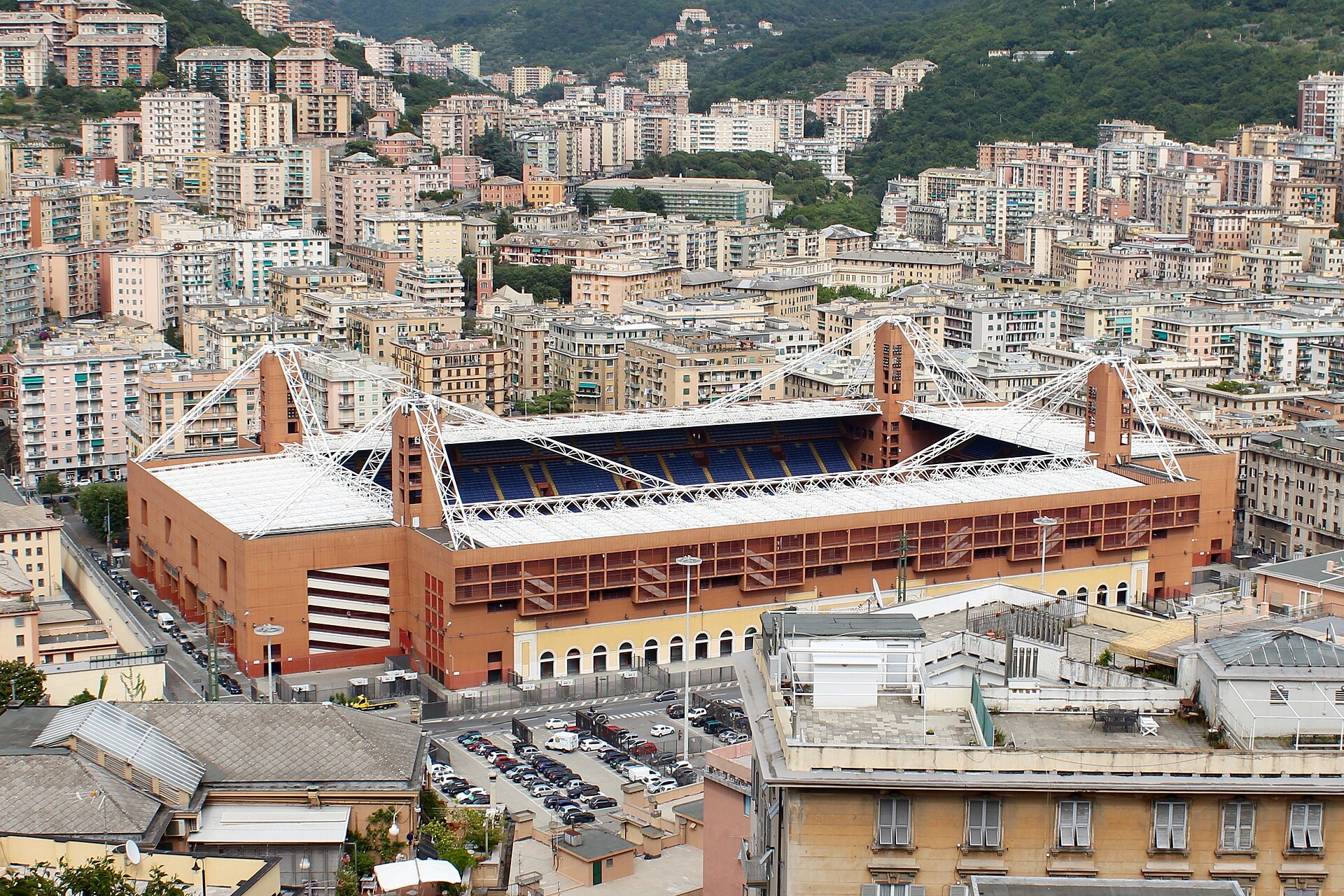
The Stadio Luigi Ferraris, known to everyone in the city simply as Marassi after the district that surrounds it, is the oldest stadium still in use in Italian football. It opened in 1911, and while it has been rebuilt and re-roofed over the decades, it has never lost the thing that makes it special: four steep, square, close-to-the-pitch stands that feel far more like an old English ground than a typical Italian bowl. For a visiting fan chasing atmosphere and history, it is one of Serie A's most rewarding away days.
This guide covers what you need for a matchday at the Stadio Luigi Ferraris: how to get there, how tickets and the strict Italian ID rules work, what the ground is like inside, and how to build a Genoa weekend around it. For the wider plan, the Genoa football weekend planner sets the match against the city and the Ligurian coast.
Getting to the Stadio Luigi Ferraris
Marassi sits inland from the harbour, up the Bisagno valley, and the smart way in is by train and then on foot.
Train (the best option)
Take a train to Genova Brignole, the city's central-east station, and walk up to the stadium from there — it is roughly a 20-minute walk along the river. Brignole is well connected to the rest of Genoa and along the Ligurian coast, so this doubles as your route in from a coastal base.
Bus
City buses 480 and 482 run up the west bank of the Bisagno toward Marassi and the stadium. On matchdays, circular services (commonly signed for the stadium) run from the waterfront around Piazzale Kennedy and from Genova Piazza Principe station, giving you options from either side of the centre.
Driving and parking
Genoa is famously tight, steep and hard to park, and Marassi is a dense residential district. Do not drive to the match — use the train and your feet.
Arrival timing
Give yourself a comfortable hour or more before kick-off, partly for the walk and partly because Italian grounds run thorough entry checks. Genoa and city rivals Sampdoria both call the ground home, so the first thing to confirm is which club is actually at home on your date — it changes the away-section arrangement and sometimes the atmosphere entirely.
How tickets and ID work
Italian football has some of the strictest ticketing rules in Europe, and Marassi is no exception. This is the part visitors most often get wrong, so read it carefully.
- Serie A tickets are tied to a named holder and require photo ID that matches the name on the ticket, both at purchase and at the turnstile. Buy in your own name and carry your passport or ID.
- Purchase only through the home club's official ticket platform or authorised channels. This is not a ground where you want to rely on informal resale — run any suspicious offer through the football ticket scam checker before paying.
- Away fans are housed in a corner of the Main Stand (the "Tribuna"), on the first or second tier depending on which club is at home. If you are following a visiting team, buy into the away allocation rather than trying to sit among home fans.
For the bigger picture on Italian ticketing and away days, the Serie A stadium guide and our guide to getting football tickets abroad are the right next reads.
Inside the ground
Marassi's charm is its shape. The four separate, steep, boxy stands sit right on top of the pitch with barely any run-off, so the sound has nowhere to go but back down onto the players. On a full night, with the Gradinata Nord in full voice, it is one of the great old-fashioned football atmospheres — intimate, loud, and a little chaotic in the best way.
It is a historic ground rather than a modern one, so temper expectations on concourse comfort and food. You come here for the theatre, not the amenities. Dress for the weather too: those open corners can funnel a cold wind off the hills on a winter evening.
Around the stadium and the city
Genoa is one of Italy's most underrated city breaks — a working port with a vast medieval old town, the tangle of narrow caruggi alleys, and a genuinely great food culture built on focaccia, pesto and fresh seafood. Base yourself near the old town or the harbour, spend the day exploring, and treat the walk up to Marassi from Brignole as part of the build-up. Eat in the centre before you head to the ground; Marassi itself is residential rather than a hospitality strip.
Making it a weekend
Liguria and the northwest give you plenty of ways to add a second match. If the Genoa or Sampdoria calendar does not line up, the coastal rail line and the short hops toward Turin and Milan open up more Serie A options — the Turin football weekend planner is a natural pairing. The Genoa football weekend planner and the weekend football trip planner help you line up two grounds without forcing an impossible double. If you are working through Italy more widely, the Mestalla guide shows the same approach applied to Spain.
Log it in Footbeen
The Stadio Luigi Ferraris is a ground for people who love football's history — the oldest in Italy, still doing exactly what it was built to do in 1911. When you visit, log the match in Footbeen so it joins your stadium map and your personal football journey. Collecting the game's great old grounds, one away trip at a time, is exactly what the app is built for.
Keep reading
- The best football museums in Europe for supporters and groundhoppers
- The best football stadium tours in Europe — and which are actually worth it
- Small football stadiums in Europe worth travelling for: intimacy over capacity
- The best football cities for stadium collectors: six trips with more than one story

Start your football journey
Free · iOS & Android · match search ready when you are
 Scan with your phone