20 football stadiums you must visit before you die
The grounds that change how you think about football
Every groundhopper has a list. The grounds they have been to, the grounds they want to visit, and the grounds they dream about. This is the third category — the twenty stadiums that are not just venues but experiences. Places where the architecture, the history, the crowd, or some indefinable combination of all three produces something you cannot replicate on television.
This is not a ranking. It is not ordered by capacity or prestige. It is a list of twenty grounds that, if you visit them, will give you twenty memories that last longer than any match result. Some are famous. Some are not. All of them are worth the trip.
1. La Bombonera — Buenos Aires, Argentina
The home of Boca Juniors is the most intense football experience on earth. The stadium holds only 54,000, but the near-vertical stands compress the noise into something physical. The concrete literally shakes when the crowd bounces — they call it "the earthquake." The Superclasico against River Plate is the fixture, but any match at La Bombonera is extraordinary. The ground is in the middle of La Boca, a working-class neighbourhood painted in primary colours, and walking to the stadium through those streets on a matchday is part of the experience.
2. Signal Iduna Park — Dortmund, Germany
Borussia Dortmund's BVB Stadion holds 81,365 and has the largest standing terrace in European football: the Sudtribune, or Yellow Wall, which packs 24,454 fans into a single tier. For fifteen euros. The noise is not just loud — it is coordinated, rhythmic, and relentless. A Friday-night Bundesliga match under the lights here is the best value in world football. No other ground combines scale, atmosphere, and affordability in the same way.
3. Anfield — Liverpool, England
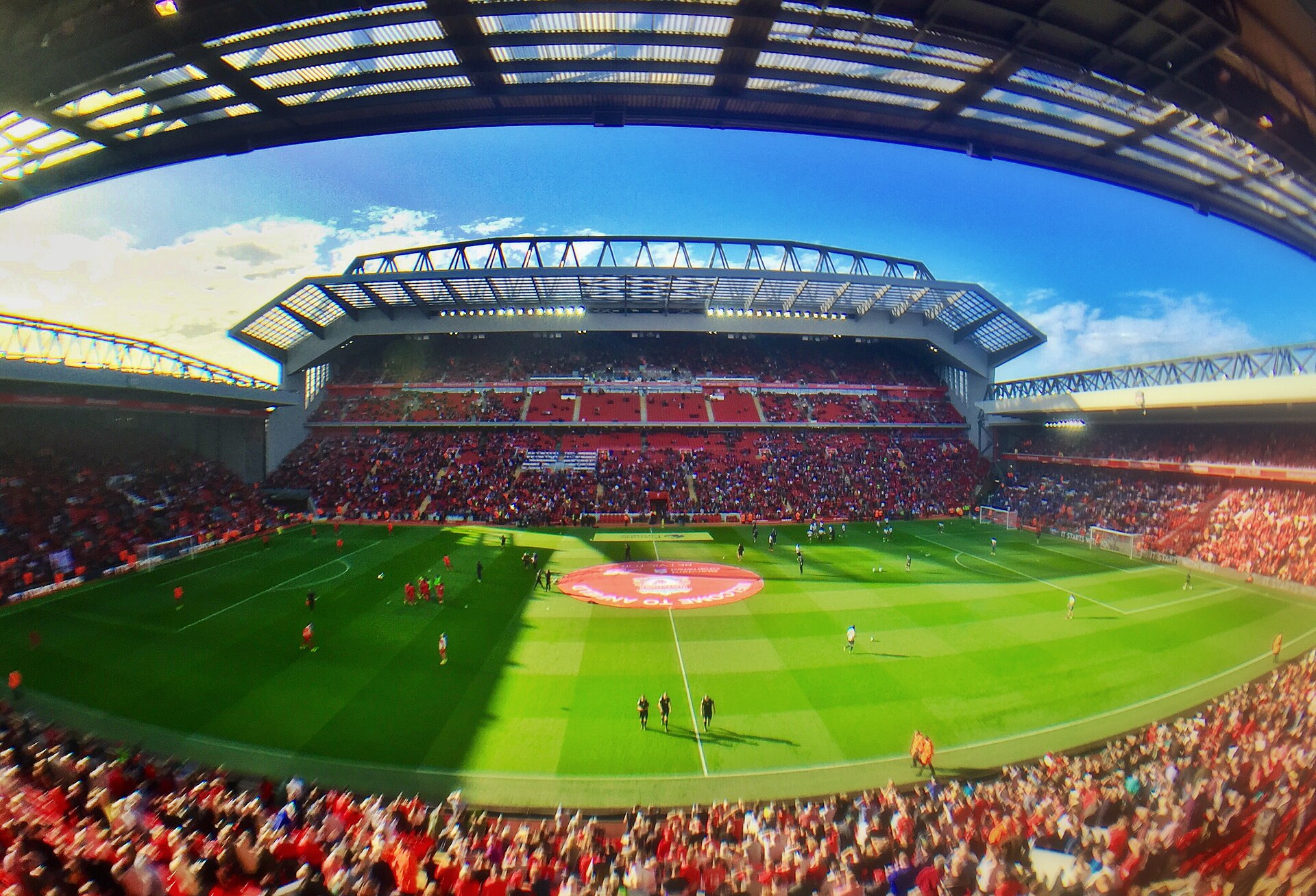
Anfield earns its place not through size or modernity but through sound. When the Kop sings "You'll Never Walk Alone" before a European night, there is nothing in football that compares. The ground has been expanded and modernised, but the essential character — tight to the pitch, steeply raked, deafeningly loud — remains. A Champions League knockout match at Anfield is the peak of English football atmosphere.
4. Maracana — Rio de Janeiro, Brazil
The Maracana is football history made concrete. It staged the decisive Uruguay–Brazil match of the 1950 World Cup final round, with FIFA recording 173,850 spectators, and the 2014 World Cup final. The ground has been rebuilt and now holds 78,000, but the name still carries a weight that no modern stadium can manufacture. Attending a Fla-Flu derby — Flamengo against Fluminense — in this stadium is a pilgrimage.
5. Camp Nou — Barcelona, Spain
Barcelona’s Spotify Camp Nou is a stadium in a phased return during redevelopment, not a completed 100,000-seat ground you can assume is fully open. The club’s March 2026 Phase 1C announcement specified a licensed capacity of 62,652. Its 2026/27 season-pass information describes a gradual return; verify your specific match’s access rather than treating the eventual design capacity as the current experience.
6. San Siro — Milan, Italy
The Stadio Giuseppe Meazza — San Siro — is shared by AC Milan and Inter Milan, and its future is uncertain. That is precisely why you should go now. The third tier, reached by the famous external spiral ramps, offers one of the most dramatic views in world football. The Milan derby is the fixture to chase, but even a routine Serie A match in this cathedral of concrete towers feels like an event. When it is eventually replaced, nothing will replicate what this ground feels like from the top tier. Our guide to stadiums changing by 2030 tracks the timeline of this and every other major project.
7. Estadio Centenario — Montevideo, Uruguay
The site of the first-ever World Cup final in 1930. The Centenario holds 60,000 and is a historic venue in football’s World Cup story. It is not modern, it is not comfortable, and it does not need to be. Watching Penarol or Nacional play here is a connection to where the entire World Cup story began. The tower at one end of the ground — the Torre de los Homenajes — is visible from across Montevideo and serves as a permanent marker of the sport's origins.
8. Tottenham Hotspur Stadium — London, England
The newest ground on this list and arguably the best-designed football stadium built in the twenty-first century. Tottenham's home holds 62,850 and was purpose-built with a single-tier south stand of 17,500 designed to create a wall of noise. The acoustics are superb, the sightlines are perfect, and the technology — including the retractable pitch — is remarkable. Whether the atmosphere matches the ambition depends on the fixture, but architecturally, this is what a modern football ground should be.
9. Allianz Arena — Munich, Germany
Bayern Munich's Munich arena glows. The exterior is made of inflated ETFE plastic panels that change colour — red for Bayern, blue when 1860 Munich played there, white for internationals. At night, approaching the stadium across the park, the effect is unlike any other ground in the world. Inside, the steep stands and 75,000 capacity create an excellent atmosphere, but it is the exterior that makes this stadium genuinely unique. No photo does it justice.
10. Estadio Banorte (Azteca) — Mexico City, Mexico
The Azteca has hosted two World Cup finals (1970 and 1986), Maradona's "Hand of God" and "Goal of the Century" in the same match, and decades of Mexican football history. At 2,200 metres above sea level, the altitude is part of the experience — visiting teams have historically struggled to breathe, let alone play. The operator’s current venue page uses the name Estadio Banorte and lists 87,000 places; check the configuration for your specific event. Its World Cup history makes the ground a natural starting point for a Mexico City football trip.
11. Rajko Mitic Stadium — Belgrade, Serbia
The home of Red Star Belgrade — known locally as the Marakana — holds 55,000 and is one of the most intimidating grounds in European football. The Delije (the club's ultras) occupy the north stand and produce an atmosphere that visiting clubs genuinely fear. Flares, choreography, non-stop singing for ninety minutes. The Eternal Derby against Partizan is the headline fixture, but any European night here is an experience you will not forget. This is football at its rawest.
12. Wembley — London, England
Wembley Stadium holds 90,000 and is the home of English football. The modern ground, opened in 2007, replaced the original but kept the iconic arch. An FA Cup final or an England international here is an event rather than just a match — the walk up Wembley Way, the scale of the bowl, the collective noise of 90,000 people singing the national anthem. It is corporate in a way that Anfield is not, but for sheer occasion, nothing in England matches it.
13. Celtic Park — Glasgow, Scotland
Celtic Park holds 60,411 and produces an atmosphere that routinely embarrasses grounds twice as famous. European nights at Celtic are legendary — ask any Barcelona, Juventus, or Lazio player who has walked out of the tunnel to the sound of 60,000 singing. The ground is modern but the culture is old: working-class, communal, loud beyond reason. The Old Firm derby against Rangers is the most intense domestic fixture in British football, but a Champions League group-stage match here is the experience to aim for.
14. Stadio Olimpico — Rome, Italy
Rome's Olimpico is shared by Roma and Lazio, and it is one of the most beautiful settings for a football match in Europe. The ground sits within the Foro Italico complex, surrounded by marble statues and fascist-era architecture. Inside, the running track creates distance from the pitch that purists dislike, but the Curva Sud (Roma) and Curva Nord (Lazio) generate atmospheres that transcend the architectural compromise. A Roma European night — with flares, choreography, and 70,000 people — is as good as it gets in Italy.
15. Stade Bollaert-Delelis — Lens, France
Lens is a small former mining town in northern France with a population of about 30,000 and a stadium that holds 38,000. The maths should not work, but it does. Stade Bollaert-Delelis is consistently rated among the best atmospheres in Ligue 1 — passionate, loud, working-class, and inclusive in a way that many larger French grounds are not. The ticket costs eight to twelve euros. The atmosphere costs nothing. This is the most underrated ground on this list.
16. Santiago Bernabeu — Madrid, Spain
Real Madrid's Santiago Bernabeu has been extensively renovated into a futuristic arena with a retractable roof and a 360-degree screen wrapping the interior. The history is extraordinary — Real Madrid won their fifteenth European Cup in 2024. Whether the new design improves or diminishes the atmosphere is a matter of ongoing debate, but the sheer weight of what has happened inside these walls makes the Bernabeu essential. A European night here, with 80,000 people expecting a comeback, is unlike anything else.
17. Ataturk Olympic Stadium — Istanbul, Turkey
The Ataturk will forever be the stadium where Liverpool came back from 3-0 down against AC Milan in the 2005 Champions League final. The ground itself is functional rather than beautiful — it was built for the Olympics that Istanbul never hosted — but the memory is seared into football history. Turkey has since developed this end of Istanbul, and attending a match here now is a chance to stand where Steven Gerrard stood and wonder how it happened. For Liverpool fans, it is a pilgrimage. For everyone else, it is a reminder that football can produce the impossible.
18. Stade Velodrome — Marseille, France
Marseille's Stade Velodrome holds 67,000 and is the spiritual home of French football. The Virage Sud, where the ultras gather, produces an atmosphere that is closer to South America than to northern Europe — constant singing, choreography, flares, and a volume that makes conversation impossible. Marseille is a city that lives and breathes football in a way that Paris does not, and the Velodrome is the physical expression of that obsession. A big European fixture here is the best atmosphere in France.
19. Stadio Diego Armando Maradona — Naples, Italy
Formerly the San Paolo, Napoli's home ground was renamed after the club's greatest player following his death in 2020. The stadium holds 54,000, and the connection between the city and the club is among the most intense in world football. Naples worshipped Maradona in life and canonised him in death — his face is on murals across the city, and attending a match here is to understand what football means when it is the identity of an entire city. The 2023 Scudetto celebrations, the first in 33 years, confirmed what everyone already knew: Napoli is not a club, it is a civic religion.
20. Estadio Monumental — Buenos Aires, Argentina
River Plate's Monumental holds over 84,000 and is the largest stadium in South America. The atmosphere for a Superclasico against Boca Juniors is the other side of the Buenos Aires derby — if La Bombonera is compact intensity, the Monumental is vast, sweeping, overwhelming noise from every direction. Even for a regular Argentine league match, the Monumental on a warm evening, with the stands full and the drums going, is a South American football experience in its purest form.
How to start
For practical weekend itineraries that combine several of these stadiums into a single trip, see our European groundhopping routes. Twenty stadiums is a lifetime project for most fans, and that is exactly the point. You are not going to visit all of them in a year. But you can pick two or three that are within reach in the next twelve months and make a plan.
The Stadium Bucket List challenge on Footbeen gives you a structured target to work toward. Log each stadium as you visit it, watch your progress build, and let the map fill in over years rather than weeks. The best groundhoppers play the long game.
For planning your next trip, the Football Travel Planner searches fixtures by date and city across its covered competitions, so you can find matches near wherever you are headed. Combine it with the stadium map to see what you have already ticked off and where the gaps remain.
If you are based in London and want to start closer to home, our guide to football matches near London this weekend explains how to use Footbeen's Travel Planner to find football matches within easy reach of the capital.
Download Footbeen on iOS or Google Play and start building the list that only you can build — one ground at a time.
Primary historical references: FIFA on the 1950 final round and Real Madrid’s 2024 fifteenth European Cup.
Keep reading

Start your football journey
Free · iOS & Android · match search ready when you are
 Scan with your phone