Allianz Arena: the complete matchday guide for visiting fans
Check the 2026/27 fixture before building Munich
Plan your Munich trip around the confirmed match. Allow time before and after it for transport, the walk and entry or departure queues.
For the current season, make these three checks before acting:
Confirm the official ticket route.
Allow for the long crowd movement back to Fröttmaning.
Use central Munich as the flexible base.
Check the 2026/27 Fixture Calendar against the official competition or club.
Keep a second match visible through the Football Match Map.
Once your fixture and ticket are confirmed, use the Football Travel Planner to organise the rest of your Munich trip.
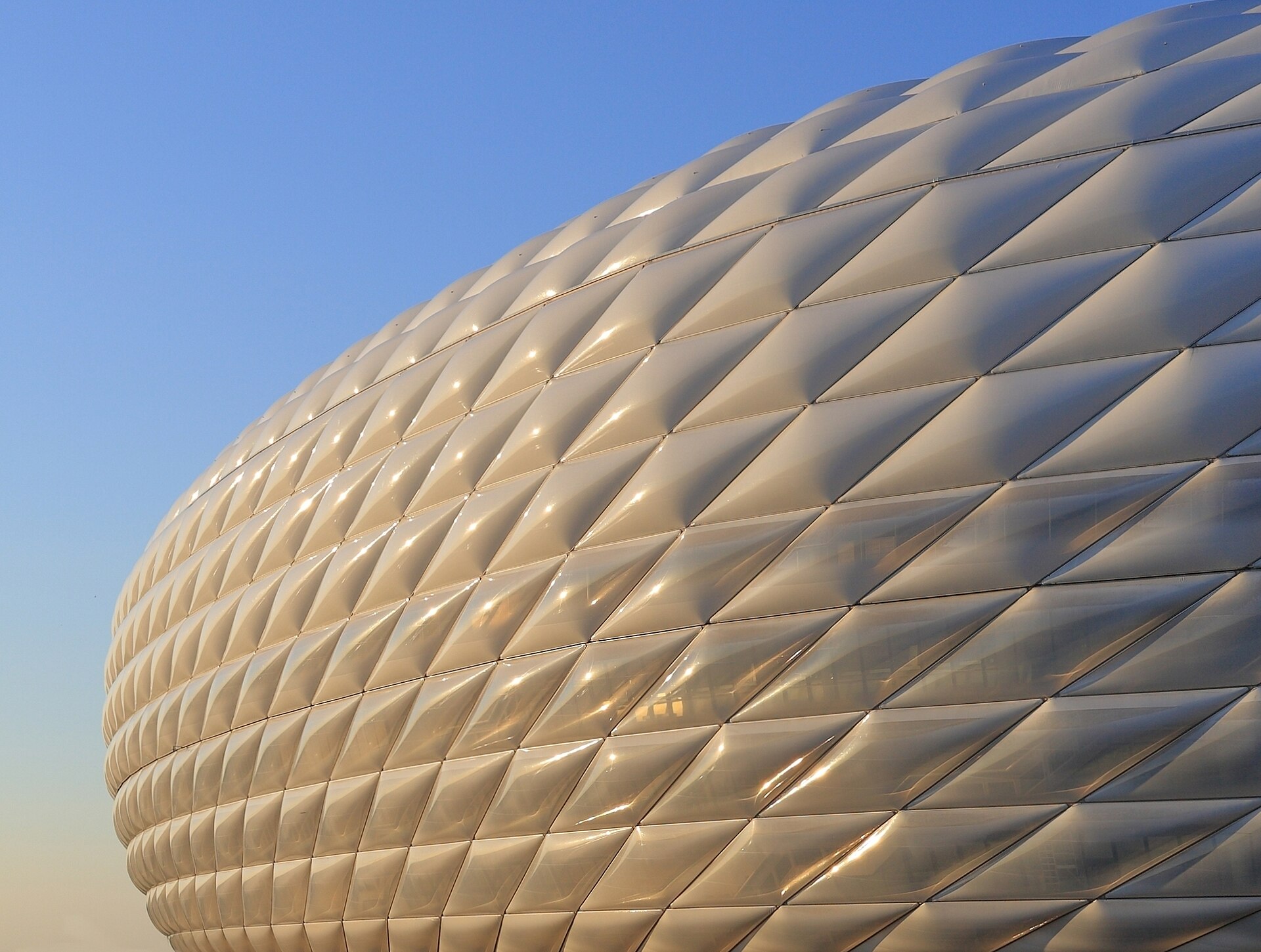
The Allianz Arena’s illuminated façade gives the approach a distinctive landmark. Lighting varies by event and occasion; the arena lists red for Bayern matches and red-white programmes on ordinary non-matchdays. Leave time for the walk from Fröttmaning and the crowd at your entrance.
Opened in 2005 and designed by Herzog & de Meuron, the arena is Bayern Munich’s home. Its inflated ETFE panels and LED façade give the building its distinctive appearance.
Plan a visit to Allianz Arena around the confirmed fixture, ticket and entry route. Include transfers, the final walk and security queues in the journey time.
The home of FC Bayern Munich is one option for a Bundesliga trip in Germany. Choose a fixture with official ticket access before committing to travel.
Getting there
The stadium is north of Munich’s centre in Fröttmaning. Allianz Arena’s official route from the Hauptbahnhof is an S-Bahn to Marienplatz, then U6 north to Fröttmaning. The arena estimates about 16 minutes for the U6 leg from Marienplatz; add time for transfers, walking and crowds, and check the current MVV journey planner.
From Fröttmaning, follow the signs and your ticket’s access instructions. Home supporters approach via the Esplanade; the arena directs visiting supporters to the entrance on the north-west side. Allow a walking and security buffer rather than assuming the nearest stream of fans uses your entrance. Exterior photos are easier to plan before the match than during the departure rush.
If driving, check the arena’s official parking arrangements and allow for traffic and departure queues. Compare that route with the current MVV public-transport plan for your fixture.
For an overnight stay, central Munich is a practical base, but door-to-door travel depends on the station, transfers and your entrance. Neither the Hauptbahnhof nor Theresienwiese is on the U6. Plan the complete outward and return journeys through MVV, including service changes and the final walk.
Tickets and access
Bayern sets the sale dates, eligibility and availability for each fixture. Check those conditions before booking travel. Neither club membership nor a ticket request guarantees admission; visiting allocations have their own club process.
The arena operator directs match-ticket enquiries to fcbayern.com. Check the chosen fixture’s prices, sale conditions and any club-authorised resale option. Do not infer availability or price from the opponent alone.
Away tickets normally come through the visiting club’s official allocation. The arena lists 7,500 guest places in its overall capacity information, but the allocation and blocks for your fixture must be checked with your club and on your ticket. Follow the match-specific route to the visiting-supporter entrance on the north-west side.
Use Bayern’s official ticket channels and any club-authorised exchange option currently offered. Unauthorised sellers can expose you to invalid or cancelled tickets; do not assume a forwarded file or screenshot gives you a valid entry right. Follow the club’s current delivery and transfer instructions for the ticket you buy.
A stadium tour and museum visit are alternatives to attending a match. The operator describes guided routes including areas such as changing rooms, the tunnel and pitchside. Check the actual package, date and access restrictions before booking; a tour is not a match ticket.
The ground and atmosphere
The arena’s tiers give different perspectives on the pitch. Use the official seating plan for your exact block and the permitted supporter section rather than assuming every visiting ticket is in the same tier.
Bayern’s Südkurve is the focal point of organised home support, with chants and choreographed displays. The northern end has its own home support as well. If your visiting allocation is in an upper tier, allow time to reach it and expect a panoramic view with more distance from the pitch. Use the official seating plan for your exact block.
The atmosphere changes with the fixture and crowd. A rivalry game or confirmed European home match may be a memorable choice, but the sound and supporter displays are not guaranteed. Choose the match for its football context as well as its reputation.
If you are planning a wider German football trip, see our Bundesliga away days guide for route ideas and practical advice on combining multiple grounds in a single weekend.
The roof covers the spectator stands, but this is still an outdoor matchday. Dress for Munich's weather and check the arena's visitor information for your seat and access route.
What to check before travelling
Stadium capacity and operating details can vary by competition, especially when UEFA rules apply. Check Bayern's matchday information before travelling so you have the current entry, bag, and seating guidance for your fixture.
Use the confirmed fixture’s date and kick-off time when booking transport. Bundesliga weekend slots and UEFA midweek fixtures can change the shape of your trip. Check MVV’s last connections and any service changes for the actual day; leave room for queues after the final whistle rather than relying on a generic underground closing time.
Check the arena’s current bag and prohibited-item rules before leaving for the stadium. Leave luggage at a suitable place before the match and contact the operator in advance about any medical or accessibility exception. Allow time for entry checks.
Payment at the arena is cashless. Its FAQ lists credit or debit cards and Apple Pay or Google Pay; the Arena Card is no longer a payment method. Check current menus and prices, and plan a meal in the city if that fits your journey.
Groundhopping around Munich
The Allianz Arena is not Munich's only football ground. For an 1860 Munich home match, check the club's fixture and ticket information for the Grünwalder Stadion. The Olympiastadion is Bayern's former home, a separate sightseeing stop; do not travel there expecting an 1860 fixture. Verify the venue on your ticket before planning transport.
TSV 1860 Munich, the city's other traditional club, are another useful option for a Munich football weekend. Their venue and competition level can change, so check the current fixture details before planning a second match. The club's fanbase remains significant despite years away from the top end of German football.
For a Bayern reserve or youth match, check the official team fixture and ticket information for the exact venue. Do not assume that Bayern II and the youth teams use the same ground, or that tickets will be available at the gate.
Ingolstadt, Augsburg and Nuremberg offer other Bavarian football options. Check each club’s confirmed fixture, venue and ticket rules, then compare complete outward and return rail journeys before planning a second match.
Using Footbeen for your trip
The Allianz Arena is one of those grounds where logging the visit afterwards feels essential. The scale, the colour, the result—whether Bayern dominance or a rare upset—deserve proper documentation.
Use the Stadium Map to explore grounds around Munich and see the stadiums you have visited. Keep future itinerary ideas in your own travel notes; the visited record should reflect matches you have actually attended.
If your dates are flexible, use the Travel Planner to compare available fixtures around Munich, then verify the venue, kick-off and ticket access with the organising club. Do not assume Bayern alternate home and away every weekend: domestic and European schedules can produce different patterns.
After attending, log the match in Footbeen and follow your visited stadiums on the map. Keep your personal notes about the seat, atmosphere and journey together with your own photos.
For collecting ideas, compare the Top 5 Leagues and Stadium Bucket List guides. Follow each challenge’s stated criteria and record the matches you actually attend.
Practical summary
Getting there: U6 to Fröttmaning, followed by the walk to your designated entrance. Add transfers, security and crowd delays to the journey planner’s estimate.
Tickets: Check Bayern’s official fixture-specific sale conditions. Visiting tickets normally come through the visiting club’s allocation; use only authorised routes.
Away section: Check your club’s allocation, ticket and current seating plan. The arena directs visitors to the north-west entrance; do not confuse that entrance with a fixed seating block.
Entry: Follow the ticket’s current delivery and access instructions. Check bag restrictions and leave time for security.
Food and drink: Check the current arena menu and prices. Payment is cashless; a meal in the city beforehand is another option.
Atmosphere: It varies by fixture and crowd. A rivalry or confirmed European home game is worth considering, without expecting a guaranteed level of noise.
Weather: Covered stands do not make this an indoor venue. Dress for Munich’s weather and check the visitor information for your seat.
Nearby grounds: Grünwalder Stadion (check 1860 Munich fixtures), Olympiastadion (former Bayern home), plus Ingolstadt, Augsburg, Nuremberg within reach.
The Allianz Arena is a distinctive stop for fans of modern stadium architecture. Confirm the match and ticket, plan the full journey and follow your entrance instructions. After attending, add the game to your football record.
Plan your visit: official arena FAQ; official transport and parking guidance.
Keep reading

Keep your football journey in Footbeen
Record attended matches and follow your visited stadiums on the map.
 Scan with your phone