Footbeen 2026/27: what’s new for the new season

A new football season is the cleanest moment to start a complete record. Log match one, add the next ground and let the story build while the details are still fresh.
Footbeen has been preparing for 2026/27 too. Over the past few months we have expanded the football catalogue, refreshed leagues, clubs, stadiums and fixtures, improved reliability and added new ways to discover, record and share your football journey.
The 2026/27 update at a glance
- More football: a broader catalogue of matches, clubs, leagues and stadiums, with easier nearby discovery on a map or in a list.
- More ways to remember a ground: save a stadium visit without claiming you attended a match, whether you went for a stadium tour, concert, museum visit or another event.
- More context: explore historical standings and see how clubs and competitions changed between seasons.
- Better memories: richer statistics, photo discovery, match invitations and shared matchday moments with friends.
- Ready for matchday: improved resilience when stadium internet is slow or disappears.
Here is what those changes mean when you actually use the app.
More football to find
Finding the right fixture should be the easy part. Footbeen's search and match discovery have been rebuilt around a larger, cleaner catalogue of leagues, clubs, stadiums and fixtures.
You can search broadly, then narrow the result by club, competition, season or location. If you are planning rather than backfilling, the 2026/27 Fixture Calendar provides a useful view of what is coming. The Football Match Map and Travel Planner help when the question is not “when does my club play?” but “what good football can I reach from here?”
Nearby matches can be explored on a map or as a list, which makes the feature useful in two different situations: finding a game around home and adding a realistic second fixture to a football trip. Search for the destination, set the area and compare the opportunities before committing to the route.
The catalogue is also easier to move through. A search for the Premier League, Liverpool or Anfield now leads into a connected set of competition, club and stadium pages instead of isolated results.
No football database is ever finished. Clubs change grounds, competitions change shape and long-tail fixtures arrive with imperfect information. We have put a great deal of work into expanding coverage, correcting gaps and making the underlying data more reliable. Even if it has been a while since you last searched, there is much more to explore now.
A stadium visit no longer needs a match
Football grounds have lives beyond ninety minutes. You might take a stadium tour, visit a club museum, attend a concert or enter the venue for another event. That place can still be a meaningful part of your journey even though it should not count as an attended football match.
Footbeen now lets you mark a stadium as visited without a match. You can add an optional date, a short personal note and up to five photographs. The visit appears in your stadium collection, country totals, profile and personal map while remaining separate from match-based records, league completion and football achievements.
That distinction matters. A tour of a famous ground is worth remembering, but it is not the same thing as being there for a match. Footbeen keeps both stories without mixing them together.
Start from the Stadium Tracker, find the ground and open its stadium page. Your match history stays football-first, while the separate stadium memory gives the rest of the visit somewhere to live.
Look backwards as well as forwards
A new season makes old tables suddenly interesting. Where did a club finish before the promotion? How did a league change across several campaigns? Which competitions did a team move through on the way here?
Historical standings are now easier to explore inside Footbeen. Where historical coverage is available, you can move between seasons and see how a club or competition changed over time. It turns a league table from a disposable snapshot into part of the story around the match you are attending.
This is particularly useful when adding older matches. The correct season gives context to a fixture: the division, the clubs around it and the difference between an ordinary league afternoon and a year that changed a club's direction.
If you have a backlog of old matches waiting in ticket emails, camera rolls or notebooks, our guide to reconstructing your football match history is a good place to begin.
Statistics that tell a story
The Stats experience has grown from a match list into a clearer picture of your football life.
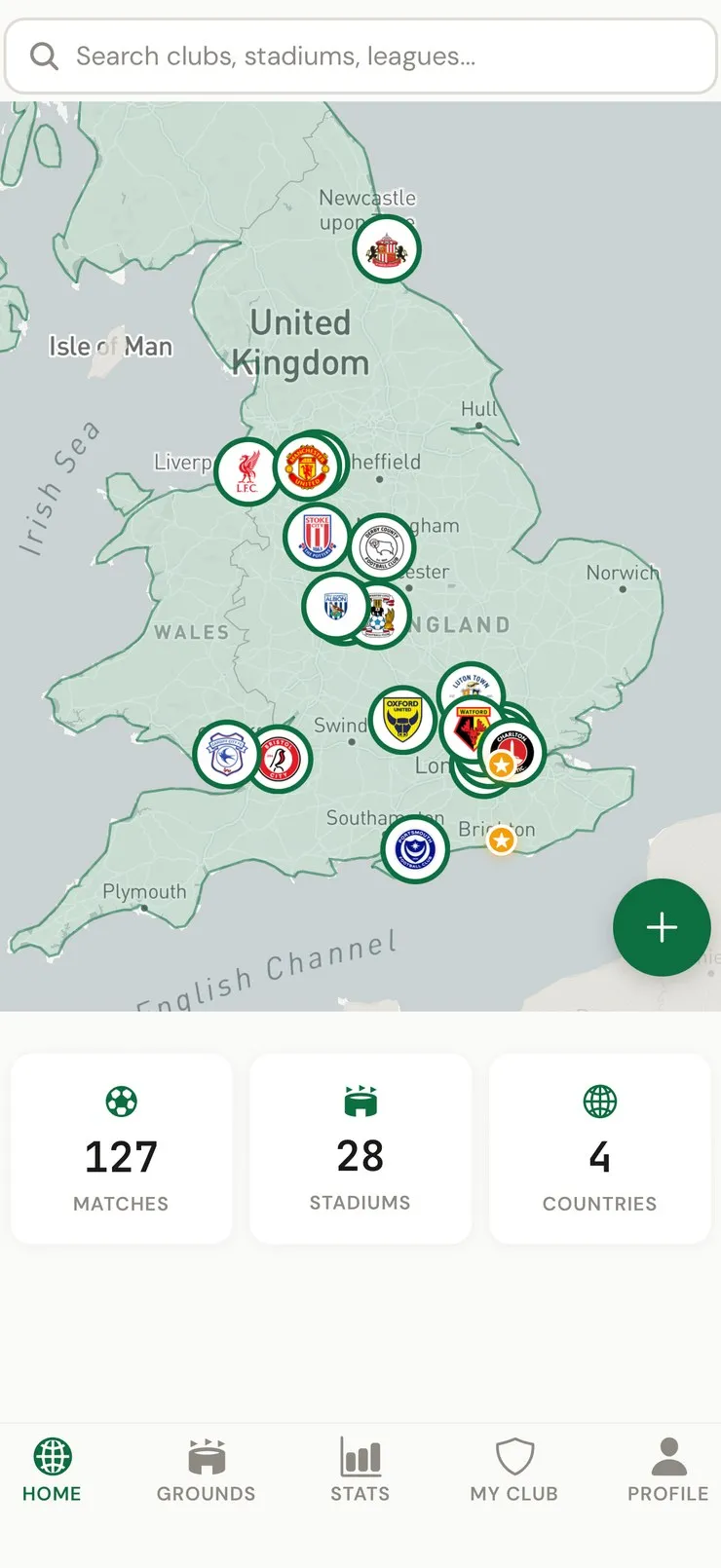
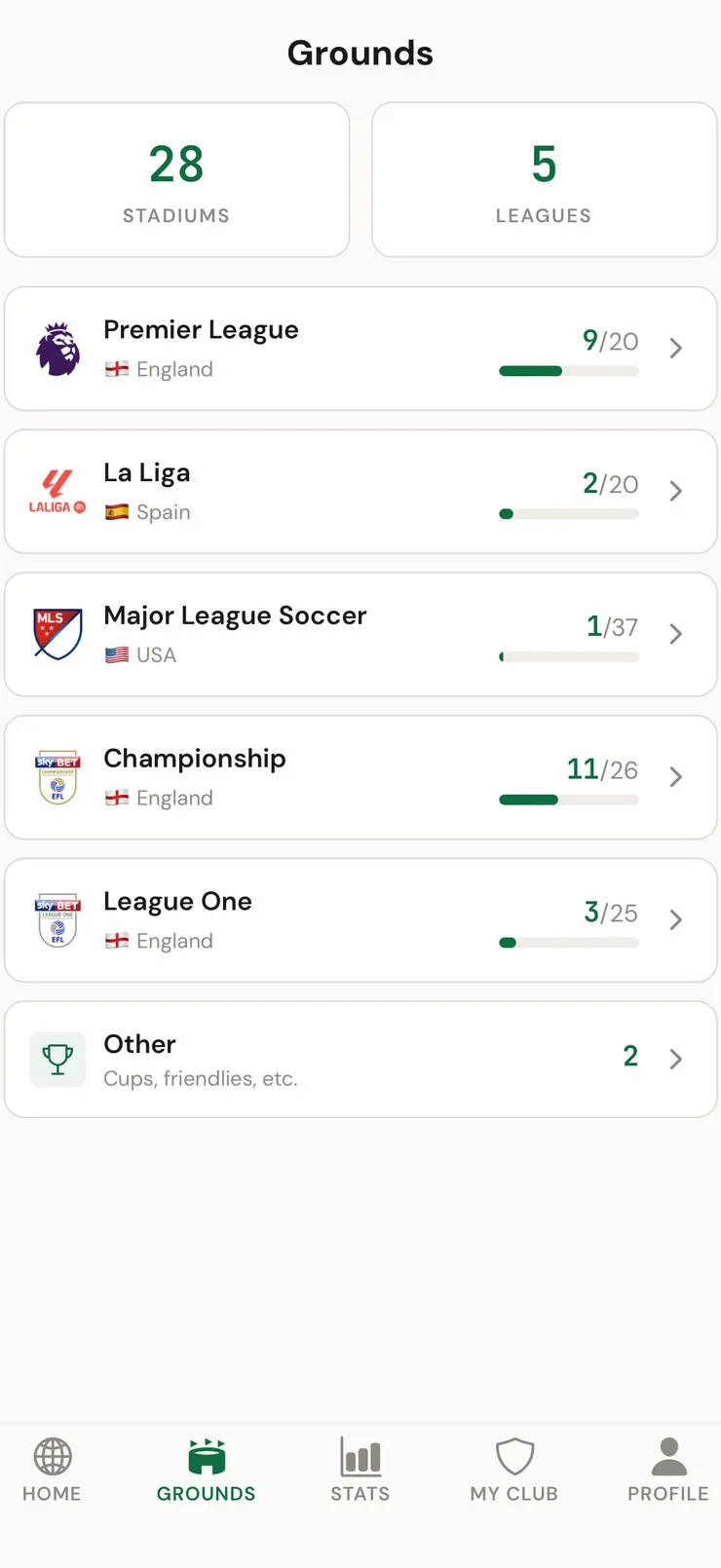
Highlights bring together your top clubs, competitions, stadiums and countries. Year-by-year views show how your attendance has changed. Fun facts surface the first match in your record, the biggest scoreline and the days when the goals refused to stop. Grounds keeps the collecting side focused: leagues, stadiums and clubs seen, with progress that survives promotion, relegation and the passage of time.
The point is not to turn every match into a spreadsheet. It is to answer questions that memory cannot. How many grounds did you actually visit last season? Which club have you seen most often? How many countries are now part of your football map? Was this your busiest year, or only the one that felt busiest?
At the end of the season, Season Recap brings those answers together as a visual story you can revisit and share. Starting in August makes that May recap much more satisfying.
Photographs with somewhere to belong
Most football photographs disappear into a camera roll between screenshots, receipts and everyday life. Footbeen gives them context: the match, the ground, the date and the people who made the day matter.
The new photo gallery is built for discovery rather than an endless random grid. It can surface recent public matchday photographs, memories from people you follow, pictures connected to your club world and grounds already on your map. Match stories with several contributors can bring different views of the same day together.
Your own photo memories remain part of the match or stadium visit that created them. They also appear across your profile and map, turning a collection of pins into something closer to a football journal.
The best habit is a small one: after the match, add one photograph and one sentence. The photograph restores the view; the sentence restores everything that happened around it.
Plan matchdays with friends
Football tracking is personal, but matchgoing rarely is. Footbeen now makes it easier to connect the record with the people who were there.
You can follow friends, see the football activity they choose to share, send a match invite and continue the plan in chat. Accepted invitations keep the shared match visible, so “we should go to that” has somewhere to become “we are going together”.
Afterwards, the photographs and match memory can preserve both the result and the company. It is a small social layer around the real experience, not a replacement for it.
Built for unreliable stadium internet
Stadium signal has a special talent for disappearing at the exact moment you need it. Footbeen is now more resilient when the connection becomes slow or unavailable.
Previously loaded screens and cached assets can remain useful, supported match saves are protected in a local queue, and pending photographs can continue when connectivity returns. The app explains when work is waiting to sync instead of leaving you to wonder whether a tap was lost.
This is not a promise that every part of Footbeen works without a connection. Live discovery still needs live data. The important difference is that a poor network should no longer turn a simple match save into a reconstruction exercise later.
A stronger Footbeen for the season ahead
The app has changed substantially over the past few months. The catalogue is broader, discovery is easier, imports and stadium data are more resilient, and the experience now connects your matches with history, photographs, friends and personal statistics.
If it has been a while since you opened Footbeen, the beginning of 2026/27 is a good moment to take another look. Update to the latest version, search for your next fixture and see how much more of your football life now fits in one place.
What comes next
This season update is not a finish line. We are continuing to improve football coverage, discovery, statistics, sharing and the matchday experience, with more useful features and partnerships on the way.
Follow @footbeenapp on X for release news, feature previews and the next announcements as they happen.
Start with match one
You do not need to rebuild your entire football life tonight. Start with the next fixture.
Before you travel, save the match. At the ground, take the photograph you will want in five years. Afterwards, mark that you were there and add the detail that made the day yours. Repeat it for the second match, then the third.
By the end of 2026/27, Footbeen can show you the season as a map, a match history, a stadium collection, a set of statistics and a gallery of memories. If you want to fill in earlier years as well, the deeper explanation of why tracking every match becomes more valuable over time is worth reading next.
Download the latest Footbeen version for iOS or Android using the store buttons below, then add the first match you plan to attend.
The new season is coming. Make sure the first match is already part of the story.
FAQ
What is Footbeen?
Footbeen is a football match and stadium tracker for iOS and Android. It helps supporters log attended matches, build a personal stadium map, follow statistics, save photographs and remember their football journey.
Can I record a stadium tour or concert without adding a match?
Yes. Open the stadium in Footbeen and choose the separate “Visited without a match” action. You can optionally add a date, note and photographs without changing your match-based records or league completion.
Does Footbeen work offline?
Footbeen keeps useful cached content available and queues supported saves when connectivity is unavailable. Live searches and other live data still require a connection, so it is more accurate to describe the app as resilient to poor stadium signal rather than completely offline.
Where can I download Footbeen?
Footbeen is available on the Apple App Store and Google Play. The download buttons on this page use the official Footbeen store listings.
Keep reading

Start your football journey
Free · iOS & Android · match search ready when you are
 Scan with your phone