Football match diary template: the two-minute record you will still enjoy in ten years
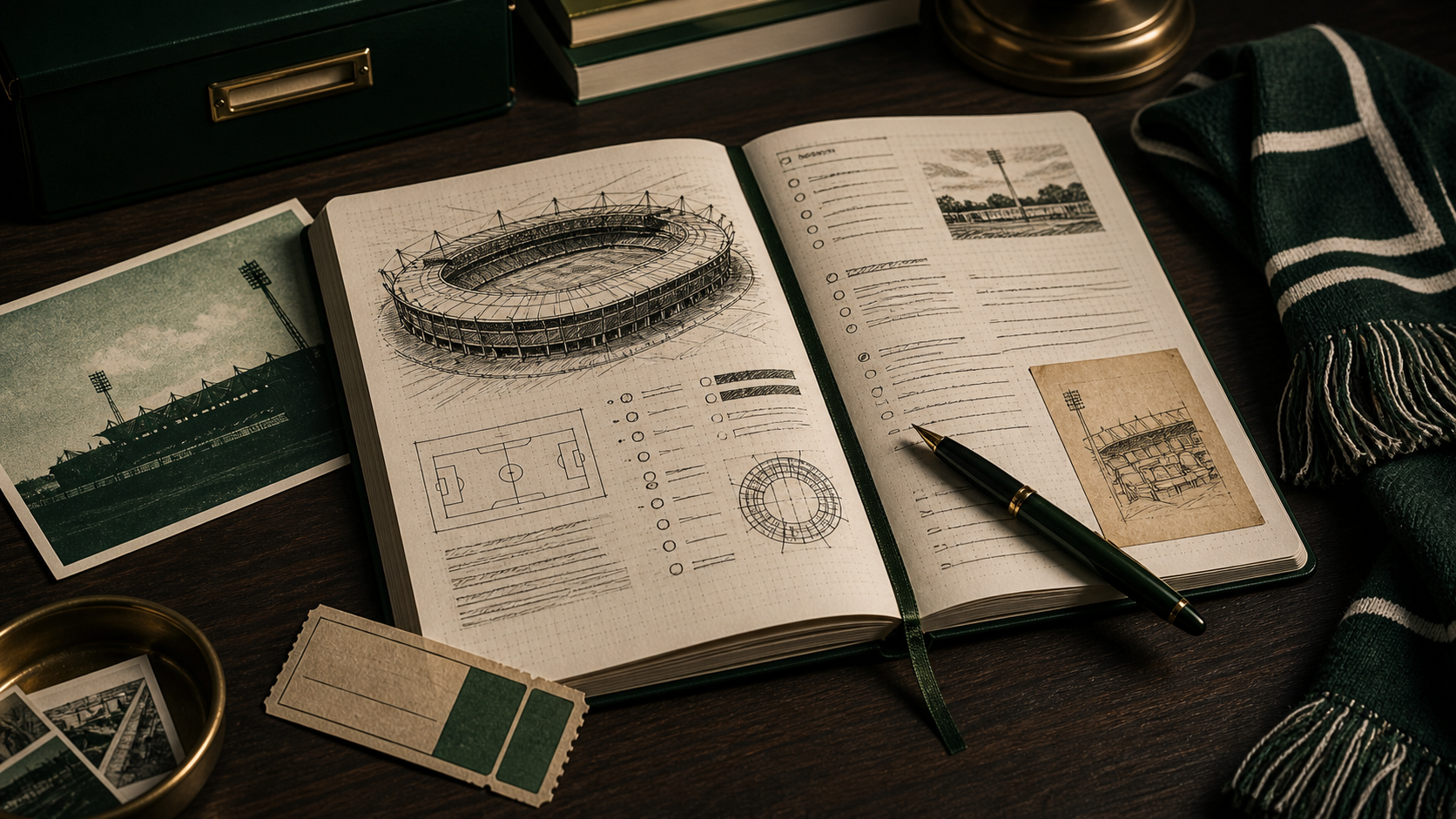
The score is the easiest part of a match to recover. The weather on the walk, the person beside you, the terrible pie and the goal you saw through a forest of raised arms are much easier to lose.
A useful football diary does not need a perfect essay. It needs two minutes before the memory becomes generic.
Copy this match diary template
Fixture:
Date and competition:
Stadium and city:
Final score:
Who I went with:
Where I sat or stood:
The moment I will remember:
One detail outside the football:
Photo or ticket saved: yes / no
That is enough. Add a longer note only when you want to.
The five details worth capturing immediately
First, confirm the physical ground. Sponsor names change; a stadium move creates a new place. Second, add the people. Years later, the same fixture means something different because of who shared it. Third, save one sensory detail: cold rain, floodlights, music, smoke, food or the walk through a neighbourhood. Fourth, write one decisive moment in your own words. Fifth, attach your own photograph or ticket where you are allowed to keep it.

Three diary styles that do not become homework
The one-line diary: stadium, score, companion and one sentence. Best when consistency matters more than detail.
The first-time-ground diary: add the arrival route, first view of the pitch, stand, food and whether you would return. Pair it with the stadium checklist.
The season diary: after each match, add one tag such as home, away, new ground, cup, derby or abroad. At the end of the season, those tags reveal the shape of the year.
Do not rate every atmosphere out of ten. A number flattens the memory and turns a personal record into a competition with strangers. Describe what happened instead.
When should you write it?
Save the fixture and score before leaving the area. Add the personal detail on the train, in the hotel or when you get home. If you wait a week, the note usually becomes “great atmosphere” — a phrase that says almost nothing.
For older matches, work backwards from evidence. Use old tickets, photos, messages and fixture archives. Mark uncertainty rather than inventing an attendance. The old-match recovery guide can help rebuild a larger archive.
A diary also prevents famous grounds from blending into one generic memory. A day at Wembley Stadium, Anfield or Camp Nou should lead back to its actual fixture, seat and companions — not only a stadium name on a list.
Use Footbeen as the diary, not merely the counter
Footbeen keeps attended matches, visited grounds and your personal map together. Add the match, verify the stadium and save the detail that belongs only to you. Your total still grows, but every number can lead back to an actual day.
Continue with what to record after a football match, how to track matches attended and the stadium tracker.
FAQ
What should I write if I do not remember much?
Record only what you can verify and mark uncertain details. A short honest entry is better than a polished invention.
Should friendlies and youth matches go in the same diary?
They can. Decide what your record includes, tag the competition and keep the rule consistent.
Do I need a photograph for every match?
No. A note, ticket or companion can be enough. The diary should support the memory, not make matchday feel like evidence collection.
How long should a match diary entry be?
One sentence is sufficient when it captures something specific. Longer entries are optional.
Keep reading

Keep your football journey in Footbeen
Log the matches you attend, save every stadium and build a record that grows with every trip.
 Scan with your phone