How to reconstruct every football match you have ever attended
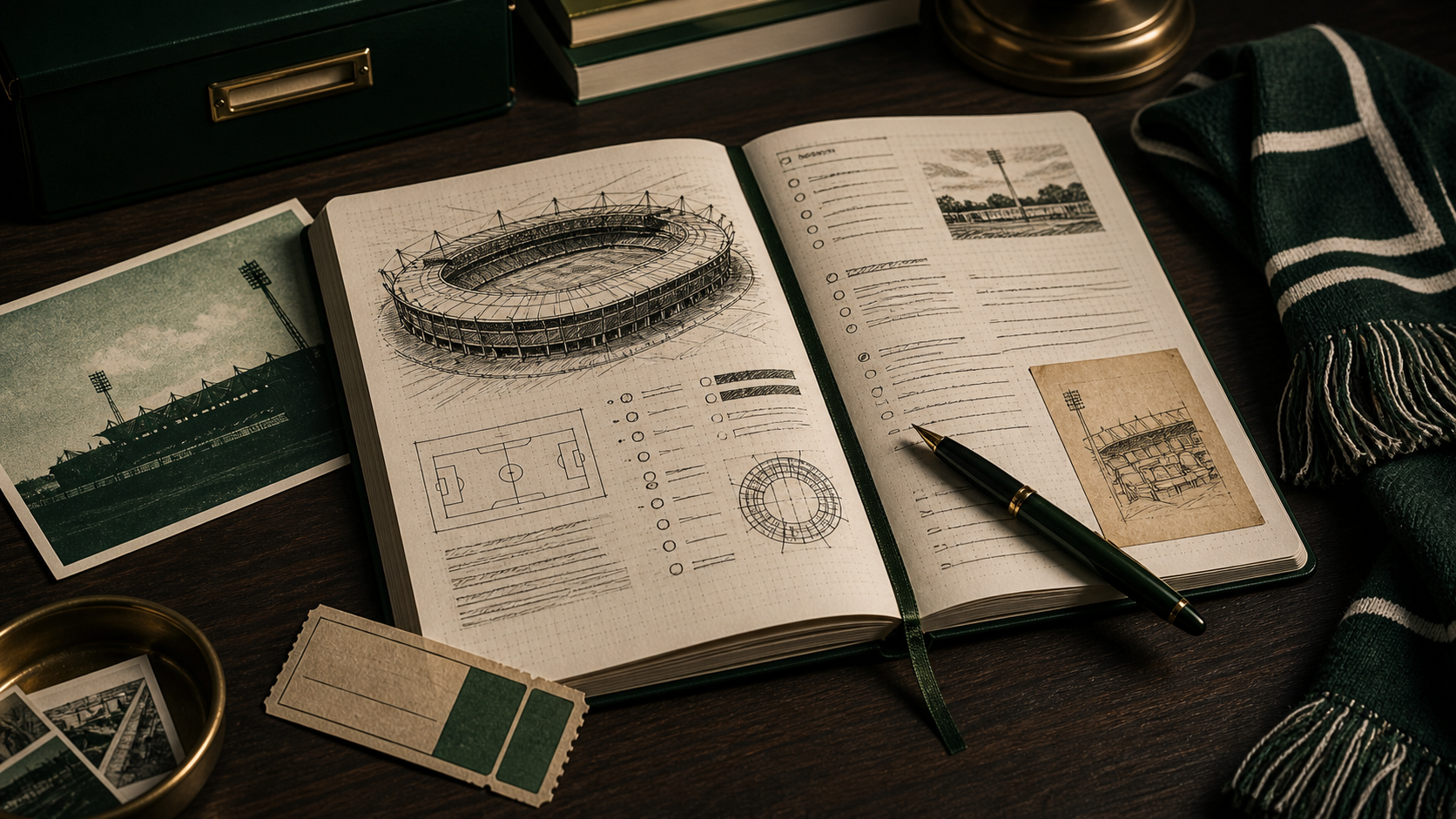
Most supporters can remember their first match and last weekend. The years between them become fragments: a paper ticket without a date, a photograph outside a ground, an opponent remembered incorrectly, a cup tie that might have been a friendly.
You can rebuild that history without pretending your memory is a database. The method is to separate evidence, candidates and confirmed attendances — then work season by season.
Use three certainty states
Every possible match belongs in one of three buckets:
| State | Meaning | Action |
|---|---|---|
| Confirmed | Date, teams and ground are supported by evidence | Add to your permanent record |
| Probable | Several details align, but one important field is unresolved | Keep in a research list |
| Memory only | You recall an occasion but cannot identify the fixture | Preserve the note; do not invent a match |
This single rule prevents most errors. A probable match is not a failure. It is a lead.
Start with the evidence you already own
Search sources in the order that gives the strongest anchors:
- Digital photographs: original timestamps, location metadata and the sequence around the image.
- Email: ticket confirmations, travel bookings, calendar invitations and forwarded plans.
- Messages: opponents, meeting points, screenshots and post-match reactions.
- Paper tickets and programmes: competition, stand, opponent and sometimes date.
- Bank statements: useful for narrowing a period, but weak proof of attendance by themselves.
- Other people: ask who went with you, then compare memories rather than letting one replace evidence.
Keep copies private. You do not need to upload personal messages or financial records to prove a match in a public place.
Build a season skeleton
Choose one club and one season. Write down every candidate month, opponent or competition you remember. Then compare with an official club archive, competition result list or reputable historical fixture database.
Do not scan decades at once. A season skeleton lets you spot patterns:
- a home match that aligns with a photograph date;
- two possible cup rounds a month apart;
- an away ground that hosted the same opponent twice;
- a postponed fixture that explains a ticket/date mismatch;
- a reserve, women's or youth match mistaken for the senior schedule.
Our shorter guide to finding old matches covers the first anchors; this article is the full evidence workflow.
Resolve the stadium separately from the fixture
Club name does not always prove ground. Teams move, share, rebuild or stage cup games elsewhere. Confirm the venue for the date, especially for:
- stadium redevelopment periods;
- ground shares;
- finals and neutral ties;
- reserve or youth matches;
- women's teams using several venues;
- abandoned or relocated fixtures.
Use Footbeen's Stadium Map to compare likely grounds, then return to a dated source before marking one visited.
Work from high-confidence clusters
Start where memory is strongest. If you know you attended five Manchester United matches at Old Trafford during one school year, solve that cluster before a vague neutral final ten years earlier.
Next, use travel anchors. A hotel receipt in Glasgow may point towards Celtic Park, Ibrox or Hampden, but it does not choose between them. A photograph of the approach, ticket email or message about the opponent can.
Progress creates recall. Once several dates are placed, birthdays, holidays and people often unlock the next season.
Avoid the five common false matches
- The fixture existed, so I must have attended it. Existence is not attendance evidence.
- The photo was exported on this date. Export and original capture dates can differ.
- I remember the score. Television memories can merge with live ones.
- The club played at its normal ground. Verify unusual periods and cup venues.
- My total should equal an old number. Do not add weak candidates to reach a remembered count.
Import in controlled batches
Once a season is confirmed, add it through Footbeen's import workflow or log matches individually. Work in batches small enough to review. After each batch, check:
- club and opponent;
- home/away orientation;
- date and competition;
- stadium;
- whether you truly attended rather than watched;
- duplicates created from alternate competition names.
The match-tracking guide explains the long-term habit after the historical work is complete.
Add the memory layer last
The factual match is the skeleton. Once it is correct, add what no fixture archive knows: who came with you, where you sat, the weather, the song stuck in your head, the missed train or why the match mattered.
Do not force a memory onto the wrong candidate. Keep a standalone note until the evidence catches up.
A weekend reconstruction session
Set a narrow target: one club, one season, ninety minutes. Gather sources, build candidates, confirm the easiest matches and stop when concentration drops. Ten accurate attendances are better than a hundred imported guesses.
Your football match diary becomes valuable precisely because the record has rules.
FAQ
How can I find an old football match if I only remember the opponent?
Add an approximate season, home club and possible competition, then compare official or reputable fixture archives. Keep multiple candidates until another piece of evidence separates them.
Do photos prove I attended a match?
An original photo timestamp and visible stadium context are strong evidence. An exported image, exterior photo or screenshot may show only that you were nearby.
Should I add uncertain matches to my tracker?
No. Keep them in a separate probable list until date, teams and venue are reliable enough to confirm.
Keep reading

Keep your football journey in Footbeen
Log the matches you attend, save every stadium and build a record that grows with every trip.
 Scan with your phone