EFL groundhopping by train: six weekend route shapes that actually work
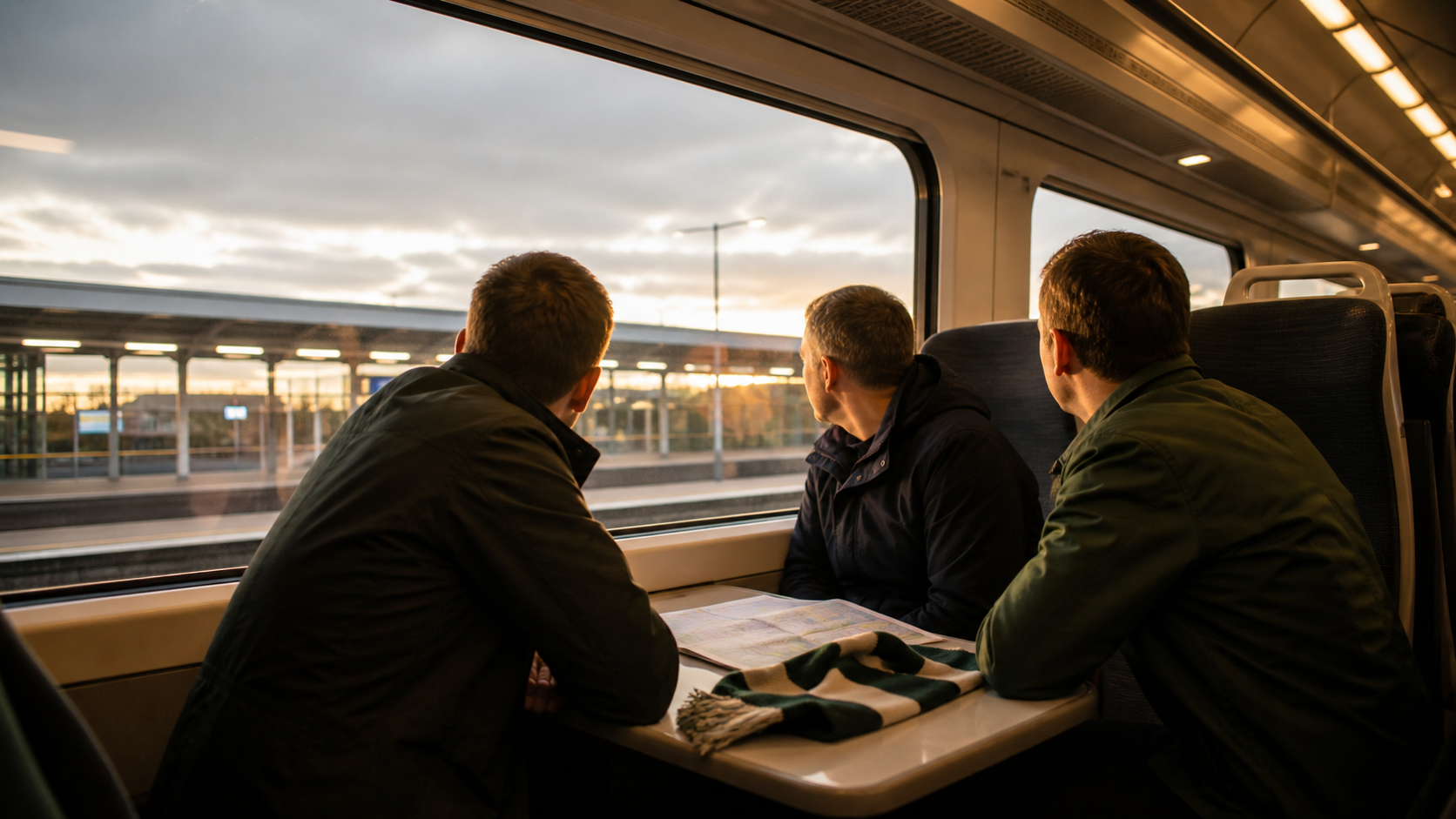
The railway map makes English football look closer than it feels after a 17:05 crowd exit. A route works only when the station-to-ground leg, the final train and the possibility of a moved kickoff all fit.
These are route shapes, not fixed fixture recommendations. Use the fixture calendar, then confirm each date and ticket with the EFL and clubs.
1. London base: one EFL anchor, one flexible edge
Stay near a station that works for both days. Make a Championship or League One match the anchor, then choose a League Two or non-league option on Sunday. Millwall, Leyton Orient and AFC Wimbledon sit in different directions; do not treat “London” as one short transfer.
2. Manchester hub: spread the North West across days
Manchester can connect football towns in several directions, but late services and matchday crowds change the calculation. One night may make Bolton Wanderers, Rochdale or Oldham Athletic a calmer separate-day choice.
3. Birmingham hub: use the Midlands density
A central base can support clubs across the West Midlands and beyond. Keep the Saturday anchor on one corridor and the Sunday alternative on another. Do not choose the hotel solely because it is closest to match one.
4. Sheffield or Leeds: choose one side of Yorkshire
Yorkshire distances are deceptive. A map may show several grounds; local services, hills and late kickoffs decide whether they belong to one weekend. Build around one city and use York City or another confirmed fixture as a separate-day trip.
5. Bristol base: South West and South Wales with care
Bristol can support a westward or Welsh route, but do not combine both simply because trains exist. Engineering works and Sunday frequency matter. Keep a backup on the same side of the base as your return home.
6. Liverpool region: city football and the Wirral
Liverpool provides a useful rail base, while Tranmere Rovers creates a distinct Wirral matchday. Give Birkenhead its own time. A Sunday fixture elsewhere can complete the weekend without pretending every famous ground is ticket-accessible.

The buffer rules
- Allow 25–40 minutes to leave a busy ground before the ordinary walk begins.
- Avoid a last train that requires the match to end exactly on time.
- Keep at least one route that does not depend on a taxi queue.
- Recheck engineering works and strikes on the operator's official site.
- Treat a second fixture as optional until its own kickoff and ticket are confirmed.
The complete rail away-day guide covers fares and final-mile checks. The Championship, League One and League Two guides help choose the anchor.
Use the football match map to discover the backup and the travel planner to compare bases. In Footbeen, log the matches you actually reach so the rail route becomes part of your stadium map.
FAQ
Can I visit two EFL grounds in one day by train?
Occasionally, but separate days are normally more robust. Include crowd exit, entry deadlines and the final local leg, not only timetable duration.
Where should I stay for a two-match weekend?
Choose the base that works for both matchdays and your departure home. The nearest hotel to match one can be the wrong base for the weekend.
When should I buy advance train tickets?
After the fixture timing is sufficiently stable, or with a fare whose change conditions you accept. Recheck operator conditions before purchase.
What if one fixture moves?
Keep a verified alternative in the same corridor and use flexible accommodation. Do not force the original route after its assumptions fail.
Keep reading

Keep your football journey in Footbeen
Log the matches you attend, save every stadium and build a record that grows with every trip.
 Scan with your phone